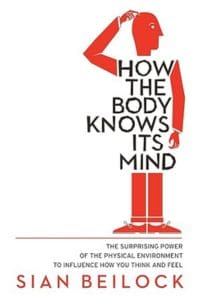
Book Review - How the Body Knows Its Mind
by Sian Beilock
Introduction: Why This Book Matters for Young Athletes Today
For children and young athletes, sport is becoming faster, more competitive, more public, and more emotionally demanding than ever. Whether they’re transitioning into new sports or squads, experiencing professional contracts for the first time, or juggling university life with high-level training, pressure is everywhere.
This is why Sian Beilock’s book How the Body Knows Its Mind is so valuable.
Beilock – a leading cognitive scientist and well-known expert on choking under pressure presents a powerful message:
Your body and mind are not separate. How you move, feel, breathe, position yourself, and interact with the world directly shapes your thoughts, confidence, and performance.
For children and young athletes, this message is transformational. Instead of seeing performance as “think harder, try harder,” Beilock shows that many barriers athletes experience are grounded in the mind–body loop, a loop that can be trained.
In this review, we’ll explore the book’s central ideas, break down what they mean for young athletes, and offer practical guidance for:
- Youngsters trying to perform consistently under pressure
- Parents wanting to support their child’s motivation and wellbeing
- Coaches seeking science-based strategies to improve young athlete or player development
- The Mind–Body Connection: Why Movement Shapes Thinking
One of the core messages in Beilock’s book is the idea of embodied cognition, the scientifically supported concept that the mind doesn’t operate in isolation but is deeply influenced by physical activity, posture, breathing, and environment.
Key Takeaway for Young Athletes
Your psychology is shaped by your physiology. This means:
- Slumped posture breeds doubt and low confidence.
- Open, stable posture helps regulate emotions and sharpens thinking.
- Physical warm-ups not only prepare the body, they prepare the brain to learn and react.
Beilock shares research demonstrating how movement enhances learning, exercise improves memory, and body cues influence confidence. For example:
- Walking boosts creativity.
- Strength work enhances cognitive functioning.
- Using the body in intentional ways can reduce anxiety before performance.
Application for Children and Young Athletes
Many teenagers and young adults are juggling exams, studies, work, relationships, and performance demands. It’s incredibly easy for them to get stuck in their head.
Beilock’s work reminds them that one of the best psychological tools they have is:
Move first. Think later.
Whether it’s going for a brisk walk, cycling to training, or engaging in a dynamic warm-up, movement primes the brain for clarity, confidence, and execution.
Advice for Parents
Encourage your child to stay physically active outside formal training walks, light games, mobility routines especially during stressful academic periods.
Advice for Coaches
Design warm-ups that activate both mind and body including:
- Decision-making
- Light competitive games
- Reactive drills
Children and young athletes should not enter sessions “cold,” physically or mentally.
- Skill Learning and Motor Performance: Why Overthinking Makes Athletes Worse
Beilock’s research is best known for unpacking why athletes choke under pressure.
Her findings are extremely relevant for teenagers and young adults transitioning into higher-stakes sport.
Why Do Athletes Choke?
Because they begin overthinking skills that should be automatic.
Beilock calls this “explicit monitoring.” When under pressure, athletes:
- Focus too hard on mechanics
- Try to control movements
- Worry about outcomes
- Increase self-consciousness
All of this interrupts the fluid, well-learned motor pathways needed for high-level performance.
This is why:
- Golfers collapse on short putts
- Footballers scuff penalties
- Gymnasts falter on simple tumbling moves
- Cricketers mis-time routine shots
- Ice skaters over-rotate or bail out of jumps
Application for Young Athletes
Youngsters are often working hard to “prove themselves.”
This mindset can cause:
- Over-analysis
- Perfectionism
- Fear of mistakes
- Focus on what people think
- Checking and rechecking technique
Beilock’s message: You perform best when you get out of your own way.
Advice for Parents
Avoid well-intentioned comments like:
- “Focus on your technique.”
- “Don’t mess up.”
- “You have to get this right today.”
Instead, emphasise rhythm, feel, and trust.
Advice for Coaches
Integrate pressure-training environments:
- Timed challenges
- Competition drills
- Limited-attention exercises
- Overload games
- Decision-progressive activities
The goal is to help athletes learn to perform under pressure without reverting to overthinking.
- Anxiety, Pressure, and the Brain: Why Worry Hijacks Performance
Beilock explains how anxiety competes for working memory, the mental space athletes need for decision-making, creativity, and coordinated movement.
For young athletes who still rely heavily on working memory during skill execution, anxiety hits harder.
This is why they may:
- “Freeze” in big moments
- Forget simple tactical plans
- Lose coordination
- Struggle to communicate
- Play safe or timid
What Helps?
Beilock discusses methods such as:
- Expressive writing – offloads worries
- Pre-performance routines – anchor attention
- Breathing techniques – calm the nervous system
- Self-compassion – reduces perfectionistic fear
Application for Athletes
Journaling fears, worries, or intrusive thoughts for 5–10 minutes before training or matches can significantly reduce anxiety.
Use a simple routine:
- Slow breath (6 seconds in, 6 out)
- Physical reset cue (shake out, strong posture)
- Attentional cue (e.g., “See the target,” “Trust it”)
- Go
This routine uses the body–mind loop to regain control.
Advice for Parents
Normalize pressure.
Help your child see nerves as:
- Energy
- Alertness
- A sign they care
Avoid minimising their feelings. Instead, ask:
“Where in your body do you feel the nerves?”
“How can your body help you feel more ready?”
This teaches regulation rather than suppression.
Advice for Coaches
Integrate “pressure literacy” into your sessions:
- Conversations about nerves
- Teaching athletes what anxiety is
- Helping them recognise physical cues
- Giving them strategies to regulate
Your role is to create a safe learning environment where mistakes are part of growth.
- The Role of the Environment: How Context Shapes Performance
Beilock highlights how situational cues, surroundings, and even subtle social signals can influence:
- Confidence
- Memory recall
- Focus
- Emotion regulation
- Decision-making
For teenagers and young adult athletes, this is incredibly relevant. They are highly sensitive to:
- Coach tone
- Peer judgement
- Team selection pressures
- Crowd expectations
- Social media criticism
They are still developing identity and cognitive maturity.
Application for Young Athletes
Beilock’s message is clear:
Choose environments that lift you, not drain you.
This includes:
- Surrounding yourself with supportive teammates
- Minimising toxic online engagement
- Creating personal spaces that feel calm and safe
- Training in environments that challenge without overwhelming
Advice for Parents
Pay attention to your child’s training environment:
- Do coaches communicate respectfully?
- Is the team culture encouraging or fear-driven?
- Does your athlete leave training feeling energised or distressed?
Small environmental shifts can produce meaningful psychological change.
Advice for Coaches
Beilock’s work underlines the importance of:
- Positive, autonomy-supportive communication
- Eliminating shaming, sarcasm, or fear tactics
- Providing clarity over ambiguity
- Using calm, confident body language
- Modelling composure under pressure
Coaches’ behaviour shapes the psychological climate athletes operate in.
- Using the Body to Manage Emotions and Build Confidence
One of the most practical parts of the book explores how small physical behaviours influence emotional states, confidence, and psychological resilience.
Examples include:
- Posture
- Breathing
- Facial expression
- Pace of movement
- Eye focus
These behaviours create feedback loops to the brain.
Application for Young Athletes
Athletes can use their body to change their mind.
For example:
- Fast footwork → faster decision-making
- Upright posture → improved confidence
- Deep breathing → reduced anxiety
- Eyes on the horizon → expanded attentional control
- Smiling → lowered cortisol
These simple tools help athletes manage in-the-moment emotions and remain composed.
Advice for Parents
You can model regulation at home:
- Calm breathing
- Stable, open posture during conflict
- Controlled tone of voice
Young athletes learn far more from what you do than what you say.
Advice for Coaches
Integrate body-based training:
- “Reset cues” after errors
- Strong posture in warm-ups
- Relaxation between drills
- Rhythmic movement patterns
- Attention through gaze control
Teaching these skills early builds long-term resilience.
- What the Book Means for the Future of Young Athlete Development
Beilock’s insights are particularly relevant for teenagers and young adult athletes because this stage of development is characterised by:
- Greater pressure
- More public judgement
- Increased expectation
- Emotional volatility
- Identity exploration
- Higher levels of comparison
- More transition stress (academy → pro, or junior → senior)
Young adults need more than technical coaching. They need:
- Tools for pressure
- Understanding of their own psychology
- Healthy environments
- Autonomy and ownership
- Supportive relationships
- Education on the mind–body connection
How the Body Knows Its Mind provides a scientific foundation for all of this.
Conclusion: Why Young Athletes Should Read This Book
Sian Beilock’s How the Body Knows Its Mind is a must-read for:
- Athletes wanting to understand pressure
- Parents wanting to support their child’s confidence
- Coaches wanting to build high-performing environments
It demystifies performance by showing that:
The solution to mental challenges often lies in the body.
If you or your athlete frequently:
- Overthink
- Doubt themselves
- Struggle under pressure
- Worry about making mistakes
- Are affected by nerves
- Freeze in big moments
This book offers practical, scientifically backed strategies that you can apply immediately.
It aligns beautifully with the core messages of mental toughness, resilience, and performance psychology that we offer support for youngsters and parents.
>> Read: How The Body Knows Its Mind – Sian Beilock
>> Read – Case Study: Helping a Young Trampolinist Overcome Mental Blocks with Backward Skills
>> Listen: Is Striving For Perfection A Good Thing In Gymnastics with Alessia Bruno
Why not join our online community – THE SPORTS PSYCHOLOGY HUB – for regular Sports Psychology tips, podcasts, motivation and support.

Best Wishes
David Charlton
Global Sports Psychologist who is located near Newcastle Upon Tyne, UK and willing to travel Internationally. David also uses online video conferencing software (Zoom, Facetime, WhatsApp) on a regular basis and has clients who he has supported in the UK, UAE, Saudi Arabia, Australia and New Zealand.
Managing Director – Inspiring Sporting Excellence and Founder of The Sports Psychology Hub. With over 15 years experience supporting athletes, coaches, parents and teams to achieve their goals, quickly.