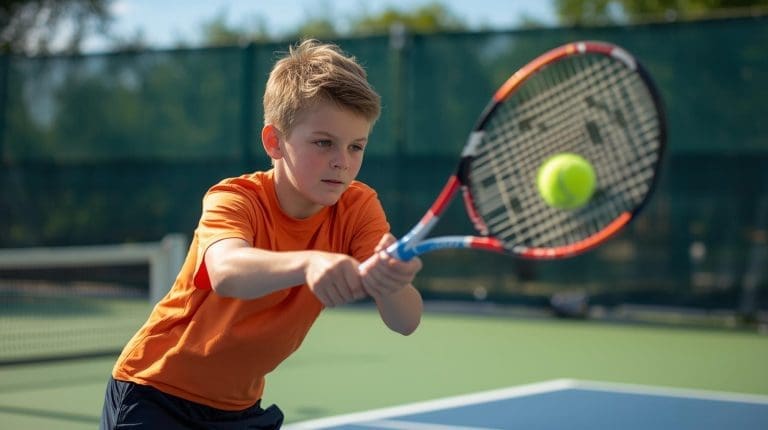
At this developmental stage, Rory’s emotional brain (limbic system) is highly active, while the prefrontal cortex responsible for impulse control, perspective-taking, and self-regulation is still immature. This mismatch is entirely normal for an 8-year-old, yet the speed of tennis, combined with frequent competition, daily training, and implicit pressures from parents, coaches, and the wider performance culture, can overwhelm a young child’s regulatory capacity.
The aim of support was not to eliminate emotion, but to help Rory understand emotions, respond differently to them, and stay calmer and more playful on and off the court.
Presenting Challenges
Rory experienced:
- Rapid emotional escalation after losing points or games
- Difficulty “letting go” of mistakes
- Anger and frustration disrupting focus and enjoyment
- Sensitivity to momentum swings common in tennis
- Pressure to win, perform, and “be brave” consistently
- Internalised expectations despite his young age
These challenges were most visible in competitive settings, particularly tournaments, where scores change quickly, breaks are short, and there is little time to cognitively reset.
Psychological Approach
Support was delivered using a developmentally appropriate, child-centred sport psychology approach, integrating:
- Cognitive Behavioural Therapy (CBT) principles
- Imagery and character-based visualisation
- Motivational Interviewing (MI) to enhance autonomy
- Practical cognitive skills training embedded in play
- Emotion coaching and emotional literacy
Sessions took place primarily online via Zoom and were intentionally playful, creative, and interactive, recognising that young children learn best through experience, stories, characters, and movement, rather than abstract instruction.
Virtual tennis scenarios were regularly used, allowing Rory to “play out” challenging match situations in a safe, pressure-free environment, rehearsing emotional responses as much as technical or tactical ones.
Developing Emotional Awareness and Control
Early work focused on helping Rory identify and name emotions he experienced during tennis both positive and negative. Together, we explored feelings such as excitement, bravery, pride, anger, frustration, embarrassment, disappointment, and fear, normalising all of them as part of sport.
Rory learned a simple but powerful idea:
“I can let my emotions take over and spoil my fun and how I play, or I can do something about them and respond differently.”
Rather than suppressing emotions, Rory was taught physical and behavioural strategies to regulate arousal:
- Breathing to slow down when angry or frustrated
- Using a towel or pause to reset between points
- Jumping or moving his feet to raise energy when flat
- Shifting attention externally to the ball or target
These tools were framed as choices, reinforcing autonomy rather than compliance an important principle when supporting children.
Imagery, Characters, and Play
Given Rory’s age and developing imagery ability, traditional visualisation was adapted into character-based imagery. Together, we created playful metaphors that Rory could easily access under pressure:
- The Sloth – slow, calm, relaxed, steady
- The Monkey – fast, clever, creative, unpredictable
Rory practiced switching between being “sloth-like” when he needed calmness and “monkey-like” when he needed energy and creativity. These characters helped him regulate pace, manage momentum swings, and stay engaged during long or challenging matches .
Additional characters (e.g., brave animals, humorous alter-egos) were used to externalise pressure and make emotional control feel fun rather than serious. Playing “virtual tennis” on Zoom allowed Rory to rehearse how these characters would respond to cheating, losing streaks, or tough opponents, without fear of real-world consequences.
Cognitive Skills in Simple Language
CBT-based skills were introduced using child-friendly language. Rory learned simple self-talk phrases tailored to match situations:
- When winning: “Stay calm. Stay focused.”
- When losing: “It’s not over. I can still come back.”
He also explored instructional self-talk (“move my feet,” “be ready”) to keep his mind task-focused rather than emotionally reactive.
Body language was a key theme. Rory practised walking, standing, and even smiling in ways that communicated confidence to himself and his opponent supporting both emotional regulation and tactical advantage.
Working With Pressure and the Tennis Environment
A significant part of the work involved helping Rory understand what he could and could not control before, during, and after matches. This was essential within the UK youth tennis environment, where children often play frequently, travel regularly, and are exposed to ranking systems and selection pathways from an early age.
Clear post-match routines were agreed, including:
- Space immediately after matches
- Delayed conversations about performance
- Reducing emotional overload during car journeys
- Using comfort objects and routines for grounding
This helped Rory decompress emotionally and reduced the accumulation of stress across training and competition blocks.
Outcomes and Reflections
Over time, Rory showed:
- Improved emotional awareness and language
- Greater ability to stay calm during matches
- Faster recovery after mistakes
- Increased enjoyment and playfulness
- More consistent bravery and creativity with shots
Importantly, progress was not linear and that was expected. Emotional regulation in young children develops gradually, especially in high-speed sports like tennis. The goal was never perfection, but growth, flexibility, and resilience.
Key Takeaway for Parents and Coaches
Young tennis players do not need fewer emotions they need help understanding and managing them. When we meet children at their developmental level, make learning playful, and prioritise emotional safety, we give them skills that support both performance and wellbeing long-term.
>> Read: Book – The Whole Brain Child
>> Read: Teaching Young Athletes Anger Management: A Parent’s Guide to Sports Aggression
If you’d like to learn more about how we could help children or young athletes why not get in touch.
Or if you found this article helpful, please share it with your friends, parents or coaches.