
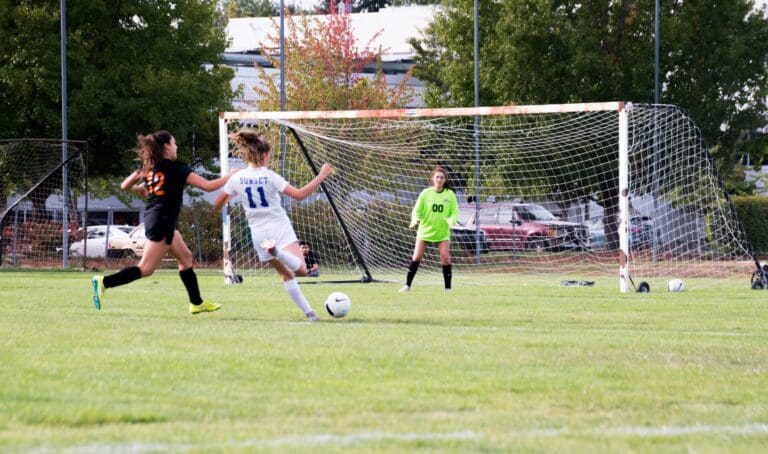
Soccer Psychology Tips: 35 Ways Mental Toughness Coaching Can Help Footballers
How important is the psychological side to you?
I’ve supported 100s of footballers from youngsters who enjoy the great game up to well established professional footballers. From my experiences and taking into consideration research I’ve read I’ve put this post together.
Very importantly, by reading the post you are taking the first step to improving your mental approach as it will help improve your self-awareness.
I’d also encourage you to print the page off or write down on a piece of paper if any of these signs reflect your performances. If you do come across some feel free to pick up the phone or contact me about some mental game coaching, it is very likely I can help you.
- You do not have well-defined goals or goal specificity.
- You lack direction.
- You perform better in training than during matches.
- You are so self-conscious; you worry about what others think about you and your game.
- You maintain many self-doubts about your performance before, during and after matches.
- You worry about letting others down by not performing up to others expectations.
- You are too self-conscious and worried about how others may perceive you.
- You suffer from anxiety, worry, or excess tension when in matches.
- Pre-game nerves do not go away after the first few minutes of a match.
- You are motivated by fear of failure and it affects the way you play football in matches.
- You have a fear of success and sabotage yourself when you are doing well
- You are not sure why you play football.
- You are motivated by external rewards, recognition, or praise.
- You attach your self-worth to how well you play football.
- You lose focus or have mental lapses during critical times during matches.
- Your routines are not well defined or lack mental focus.
- You go through the motions physically without mental focus or intensity.
- You are not excited enough or are too excited to perform your best in critical moments.
- You are distracted by things that go on around you in your environment.
- You have doubts or negative thoughts before, during, or after matches.
- After injuries you cannot perform the way you did before even when 100% physically recovered.
- When performing well you sabotage your performance with a comfort zone where your energy levels and mental focus drops.
- You become easily frustrated because of high expectations.
- You cannot perform with freedom or trust in times of adversity or pressure.
- You work on your technique even when playing in matches.
- You do not concentrate in the here and now or focus only on execution.
- You think of too much about consequences of your performance, good or bad.
- You over analyze mistakes and go on to think too much about technique.
- You suffer from low self-confidence or self-esteem.
- You limit your performance with negative self-labels such as “I am rubbish or he/she is a much better player.”
- You have trouble forgetting or letting go of bad past performances.
- You let criticism from coaches, team-mates and fans affect you off the pitch.
- You struggle to bounce back quickly from errors that you make.
- You play within yourself, with a sense of fear.
- You do not like voicing your opinions to your team-mates.
- Your relationship with your coach is holding you back.
Can you identify with any of the above statements?
If so, well done. This is the first, and a very important step in improving your mental skills to aid your performance.
If you would like to share your experiences as a soccer parent or get insights regarding kids soccer sports psychology, you may also wish to join David in The Sport Psychology Hub.

Best Wishes
David Charlton
Global Soccer Psychologist who is located near Newcastle Upon Tyne, UK and willing to travel Internationally. David also uses online video conferencing software (Zoom, Facetime, WhatsApp) on a regular basis and has clients who he has supported in USA, Canada, South America, UAE, Australian and New Zealand.
Managing Director – Inspiring Sporting Excellence and Founder of The Sports Psychology Hub. With over 10 years experience supporting athletes, coaches, parents and teams to achieve their goals, quickly.

How to Let Go of Mistakes in Padel
Racket Sports Psychology Tips: How to Let Go of Mistakes in Padel A Guide for Young Players, Parents and Coaches Why Letting Go of Mistakes in Padel Is One of the Most Important Mental Skills a Young Player Can Learn Every young padel player makes mistakes. Mishitting a smash, sending a bandeja into the net,
How to Regain Momentum in Tennis
Racket Sports Psychology Tips: How to Regain Momentum in Tennis A Guide for Young Players, Parents and Coaches What Is Momentum in Tennis and Why Does It Matter for Young Players? Momentum in tennis is the invisible force that shifts the feel and flow of a match. One moment a young player is in control;
Conversations With Kids: When Your Child is Trialling at an Elite Sports Academy
Conversations with Kids: When Your Child is Trialling at an Elite Sports Academy For parents and guardians where we give you prompts so that you can have more meaningful conversations with your children to help them build key characteristics such as mental toughness, resilience, confidence, creativity, focus and so on. A Questions for Your Kids
My Son is Trialling at a Cat 1 Academy – How do I Protect His Mental Health?
Football Psychology Tips: My Son is Trialling at a Cat 1 Academy How do I Protect His Mental Health? A discussion we have with a lot of parents whose children are trialling at a Cat 1 Professional Football Club Academies is around protecting their child’s mental health? This is often the scenario where you’ve watched
How to Stop Being Too Hard on Yourself in Tennis
Racket Sports Psychology Tips: How to Stop Being Too Hard on Yourself in Tennis And Why It’s Holding Your Child Back A significant number of young tennis players and their parents get caught up in judgement. Judging a missed shot. Judging a bad game. Judging themselves, their technique, their opponent, or even the conditions. And