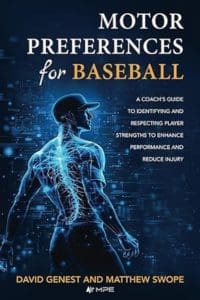
Book Review - Motor Preferences for Baseball: A Coach’s Guide to Identifying and Respecting Player Strengths to Enhance Performance and Reduce Injury
by David Genest and Matthew Swope
Introduction: Why Motor Preferences Matter in Modern UK Sport
Throughout the United Kingdom, numerous adolescents and young adults engage in organised competitive sports each week, including academy football, age-grade rugby, county cricket, pathway netball, and performance-level hockey. These young athletes are talented, committed, and eager to improve. But they often receive coaching that pushes them toward a “perfect” technical model.
The problem? No two athletes move the same way.
The book Motor Preferences for Baseball: A Coach’s Guide to Identifying and Respecting Player Strengths to Enhance Performance and Reduce Injury may be written for baseball coaches, but its deeper lessons apply directly to every UK sport especially those involving striking, throwing, sprinting, changing direction, jumping, tackling, and reactive decision-making.
Its central message is simple yet powerful:
Athletes perform at their best when their natural movement preferences are recognised, respected and developed not overridden.
This concept aligns closely with sport psychology principles relating to confidence, self-awareness, decision-making, adaptability and mental toughness.
In this review, I explore how movement preferences affect young athletes’ performance, why the book’s message matters for sports like football, rugby, cricket, netball and hockey, and what parents and coaches can learn to support long-term development.
- What the Book Teaches And Why It’s Relevant to UK Sport
The book explains how athletes possess unique motor preferences subconscious patterns relating to:
- How they shift weight
- How they rotate their hips and shoulders
- Their preferred stride, foot strike and balance
- Their sequencing of movements
- How they produce power
- How they coordinate limbs
- Their spatial awareness
- Their reaction style under pressure
These differences show up across UK sports:
- A winger’s acceleration pattern in football or rugby
- A cricket batter’s initial weight transfer or back-lift
- A netball shooter’s timing and shoulder rhythm
- A hockey midfielder’s turning arc
- A rugby fly-half’s kicking approach
- A goalkeeper’s diving pattern
The book emphasises that forcing athletes into identical technical templates can:
- Increase injury risk
- Reduce performance under pressure
- Crush confidence
- Create hesitation or overthinking
- Lead to burnout or frustration
Instead, when coaches identify movement preferences early and integrate them into teaching, athletes:
- Learn faster
- Move more fluidly
- Reduce compensatory injuries
- Build self-belief
- Perform more naturally under pressure
- Retain motivation long-term
- Why Motor Preferences Matter Immensely for Teenagers and Young Adults
Adolescence and early adulthood are periods of intense change. Athletes experience:
- Growth spurts
- Rapid increases in training intensity
- Heavy physical loads
- Greater tactical demands
- Pressure to perform for selection
- Sensitivity to comparison
- Increased self-judgment
Without understanding their movement tendencies, young athletes often internalise technical struggles as personal failures:
- “Why can’t I move like them?”
- “I must be doing something wrong.”
- “Maybe I’m not talented enough.”
This can significantly undermine:
- Confidence
- Motivation
- Mental toughness or resilience
- Enjoyment of sport
Motor preference awareness helps athletes shift the conversation to:
- What works best for my body?
- How can I use my natural strengths?
- How does my movement help me thrive?
This reframing is psychologically liberating.
- Sport-Specific Examples of Motor Preferences in Action
Football
A full-back may naturally open their hips right-to-left more comfortably than left-to-right. Forcing symmetry too early may reduce agility.
A midfielder may have a natural “scan rhythm” quick micro-adjustments before receiving that shouldn’t be coached out simply because it looks different from a model example.
Rugby
A fly-half’s kicking approach might involve a natural diagonal alignment that maximises power.
A flanker’s tackling angle may suit a left-sided hit more than right-sided, affecting positioning not ability.
Cricket
A batter may prefer front-foot weight initiation instead of back-foot load and this should inform coaching, not be labelled “wrong.”
A fast bowler’s natural arm path (side-on, front-on or mixed) needs respecting to avoid back stress injuries.
Netball
A GA/GS may have a personalised timing pattern for their shooting routine that is rhythmically perfect for them but doesn’t match a textbook technique.
A WD may pivot more efficiently off one foot forcing uniformity may lead to rolled ankles.
Hockey
A player’s turning radius and body angle are deeply influenced by natural balance preferences.
A drag-flicker’s wrist action can vary massively; forcing a “one-size-fits-all” technique which can cause wrist and back strain.
- The Psychology Behind Motor Preferences and Why This Matters to Coaches
- Confidence and Self-Belief
Young athletes thrive when they feel accepted and understood.
Coaching that recognises individuality promotes:
- Trust
- Exploration
- Positive risk-taking
- Healthy ambition
- Reduced Overthinking
Athletes under pressure rely on automatic movement patterns. If coaching battles these patterns, performance collapses.
- Enhanced Mental Toughness
True mental toughness isn’t forcing athletes to mimic others it’s supporting them to feel comfortable in their own skin and express their best version under pressure.
- Higher Motivation
A personalised coaching approach aligns perfectly with Self-Determination Theory:
- Autonomy → athlete ownership
- Competence → mastery in their own style
- Relatedness → trust in the coach–athlete relationship
- How Parents Can Support Young Athletes Through Movement Differences
Parents play a powerful role in helping their child build a healthy relationship with their body and their sport.
- Avoid comparison
Your child’s movement style is not a flaw it’s part of their performance identity.
- Encourage curiosity
Ask:
- “What movement felt natural today?”
- “What helped you find rhythm?”
- Understand the impact of growth spurts
Temporary awkwardness is normal, motor preferences can shift or feel inconsistent.
- Support open communication
If something feels uncomfortable, painful or forced, encourage them to talk.
- Practical Advice for Coaches Integrating Motor Preferences
- Observe first, instruct second
Watch how athletes naturally solve movement problems before imposing technical cues.
- Offer choices
Provide two or three movement options, then let the athlete choose what feels best.
- Encourage exploration
Use variable practice:
- Different tempos
- Changing angles
- Diverse footwork patterns
- Altered movement sequences
- Build adaptable athletes
In cognitive training it is well known that adaptability is the foundation of modern performance.
- Reduce rigid language
Avoid “you must” and use “try,” “feel,” “explore.”
- Collaborate with athletes
Ask:
- “Where do you feel strongest?”
- “What movement feels natural?”
- “Show me your preferred pattern.”
- Injury Risk and Motor Preferences A Major Benefit of This Approach
One of the strongest arguments in the book is injury prevention.
Forcing athletes into movement patterns that don’t suit them can lead to:
- Tendinopathies
- Lower back stress
- Hamstring strains
- Knee tracking issues
- Shoulder overload
- Groin/adductor problems
- Chronic fatigue
When athletes move according to their own biomechanics, load is distributed naturally and efficiently.
Early identification of movement preferences is vital for long-term durability.
- Mental Skills to Pair With Motor Preference Awareness
Motor preferences do not replace psychological skills they complement them.
- Self-awareness
Athletes develop a clearer understanding of what helps them perform.
- Growth mindset
They see movement exploration as part of improvement, not evidence of failure.
- Emotional regulation
Reducing overthinking frees up both movement and decision-making.
- Confidence training
Mastery of personal movement patterns builds genuine, robust self-belief.
- Strengths of the Book And Areas It Could Go Further
Strengths
- Clear explanation of movement individuality
- Strong coaching philosophy
- Excellent injury-prevention rationale
- Practical examples
Areas for Growth
- More psychological integration
- More guidance for parents
- A deeper dive into youth athlete development
Despite these, the book is a valuable resource for UK coaches and parents seeking a holistic approach to performance.
- Who Will Benefit Most From This Book?
- Teenagers in performance pathways
- University athletes
- Aspiring academy footballers
- County and regional rugby, cricket, hockey and netball players
- Coaches and S&C practitioners
- Parents supporting multi-sport development
Conclusion: A Book That Champions Individuality and Human Performance
Motor Preferences for Baseball delivers a message that UK sport can learn a lot from:
Athletes are individuals, not templates. When coaching honours natural movement preferences, performance, confidence and wellbeing all thrive.
For teenagers and young adults navigating selection pressure, physical changes, comparison and expectation, this insight is transformative. It empowers them to know themselves deeply and perform with freedom.
For parents, it offers reassurance that your child’s differences are often strengths waiting to be nurtured.
For coaches, it provides a compelling framework for creating environments where young people flourish physically, psychologically and emotionally.
For further details read on or tune in here!
>> Listen: How To Create Better Decision Makers with Cognitive Training – Felix Lehmann
Why not join our online community – THE SPORTS PSYCHOLOGY HUB – for regular Sports Psychology tips, podcasts, motivation and support.

Best Wishes
David Charlton
Global Sports Psychologist who is located near Newcastle Upon Tyne, UK and willing to travel Internationally. David also uses online video conferencing software (Zoom, Facetime, WhatsApp) on a regular basis and has clients who he has supported in the UK, UAE, Saudi Arabia, Australia and New Zealand.
Managing Director – Inspiring Sporting Excellence and Founder of The Sports Psychology Hub. With over 15 years experience supporting athletes, coaches, parents and teams to achieve their goals, quickly.