
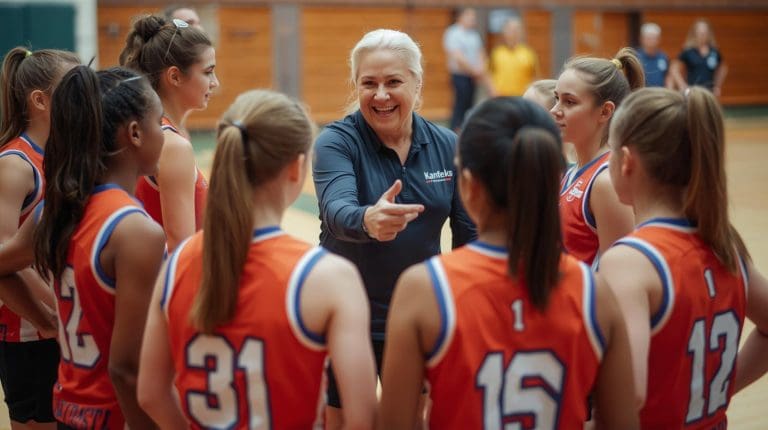
Interpersonal Confidence in Netball
How Coaches Can Help Young Players Speak Up and Thrive
Confidence in sport is usually associated with performance.
As coaches, we often focus on helping players believe in their ability to shoot, defend, pass, or perform under pressure.
But there is another type of confidence that quietly shapes many sporting environments.
INTERPERSONAL CONFIDENCE
For netball coaches working with young female athletes, understanding this form of confidence can dramatically improve communication, learning, and team culture.
What Is Interpersonal Confidence in Sport?
Interpersonal confidence refers to how comfortable an athlete feels communicating with others in their sporting environment.
This includes the confidence to:
- Speak up in discussions
- Ask questions during training
- Express opinions or ideas
- Challenge something respectfully
- Share feedback with coaches or teammates
Many children have strong technical ability but struggle with interpersonal confidence.
This can limit their learning and development if coaches are unaware of the dynamic.
Why Interpersonal Confidence Matters in Netball Coaching
Netball is a fast-paced team sport where communication is critical.
Players must constantly:
- Call for the ball
- Organise defensive structures
- Provide support to teammates
- Ask for clarity on tactics
If a netball player lacks interpersonal confidence, she may hesitate to contribute verbally.
Over time this can lead to:
- Reduced engagement in training
- Lower confidence during matches
- Hesitation when making decisions
- Avoiding leadership opportunities
Creating a coaching environment where athletes feel safe to communicate is therefore essential.
A Common Coaching Dynamic: The Confident Coach and the Quiet Player
Many netball coaches are strong communicators.
They are articulate, confident, and comfortable leading discussions with their team.
These qualities are important leadership strengths.
However, when a highly confident coach works with a quieter athlete, a subtle imbalance can develop.
The coach may unintentionally:
- Dominate conversations
- Fill silence quickly
- Interrupt without realising
- Push their perspective strongly
Meanwhile the athlete may begin to:
- Speak less during discussions
- Avoid asking questions
- Accept feedback without responding
- Withdraw slightly from conversations
These players are often labelled “quiet” or “shy.” But the issue is often deeper.
The athlete may simply not feel psychologically safe enough to speak freely.
How the Coach–Athlete Relationship Influences Confidence
Professor Sophia Jowett’s 3 + 1 Cs model of the coach–athlete relationship provides a powerful framework for understanding how communication shapes confidence.
The four elements are:
Closeness
The emotional bond between coach and athlete.
Young players are more likely to speak openly when they feel respected, valued, and understood.
Coaches can build closeness by asking questions such as:
- “What did you notice in that passage of play?”
- “How did that quarter feel for you?”
- “What might you try differently next time?”
These simple invitations show players their voice matters.
Commitment
Commitment refers to the shared intention to develop the relationship over time.
When netball players feel their coach is invested in their development, not just their performance, they are more likely to contribute and engage.
Confidence grows through consistent experiences of patience and support.
Complementarity
Complementarity describes how the behaviours of coach and athlete work together.
Highly confident coaches sometimes need to consciously create more space in conversations.
This might involve:
- Pausing before speaking
- Allowing players time to respond
- Listening without interruption
Strong leadership does not mean talking more.
Often the most powerful coaching action is simply listening carefully.
Co-orientation
Co-orientation refers to whether the coach and athlete understand each other’s perspective.
For example, a coach might think:
“She’s quiet because she has nothing to say.”
But the athlete might actually be thinking:
“I’m not sure if it’s safe to say what I really think.”
When coaches explore these perceptions openly, relationships often improve dramatically.
Interpersonal Confidence and Mental Toughness
Within Peter Clough’s 4Cs model of mental toughness, confidence is a core component.
However, confidence in sport is not only about performing well under pressure.
It also includes INTERPERSONAL CONFIDENCE
This means helping athletes develop the confidence to:
- Communicate openly
- Ask questions when unsure
- Share ideas and perspectives
- Challenge respectfully when necessary
For young netball players, these skills are not just important in sport, they are highly valuable life skills.
5 Practical Ways Netball Coaches Can Build Interpersonal Confidence
Netball coaches can support interpersonal confidence by making small adjustments to their communication style.
- Ask open-ended questions
Encourage players to reflect rather than just listening passively. - Pause after asking a question
Silence allows players time to think and respond. - Acknowledge player contributions
Positive reinforcement increases willingness to speak again. - Encourage peer discussion
Small group conversations often feel safer for quieter athletes. - Model respectful communication
Players learn how to speak up by watching their coach.
A Reflective Question for Netball Coaches
As you reflect on your own coaching style, consider this:
Are you creating space for your players to contribute, or are they simply learning to stay quiet?
And a footnote, there’s an argument to say that sometimes the quietest player in the team may actually have the most insight to offer. They just need the confidence and the invitation to share it.
You may also wish to listen to:
>> 309 Interpersonal Confidence: When Coaches and Athletes Think Differently
>> 308 Confidence In Ability: When Coaches and Athletes Think Differently
Or Read:
>>Supporting Highly-Driven Athletes: A Coach’s Guide
>>Emotional Control for Coaches: Replace Outcome Talk with Process Cues
Frequently Asked Questions About Interpersonal Confidence in Sport
What is interpersonal confidence in sport?
Interpersonal confidence in sport refers to how comfortable athletes feel communicating with others in their sporting environment, including asking questions, sharing ideas, and expressing opinions.
Why is communication important in netball?
Communication in netball helps players organise tactics, call for passes, support teammates, and make quick decisions during play.
How can coaches build interpersonal confidence in young athletes?
Coaches can build interpersonal confidence by creating psychological safety, asking open questions, listening actively, observing netball players and encouraging players to contribute to discussions.
You can also join our online community – THE SPORTS PSYCHOLOGY HUB – for regular Sports Psychology tips, podcasts, motivation and support.

Best Wishes
David Charlton
Global Sports Psychologist who is located near Newcastle Upon Tyne, UK and willing to travel Internationally. David also uses online video conferencing software (Zoom, Facetime, WhatsApp) on a regular basis and has clients who he has supported in the UK, UAE, Saudi Arabia, Australia and New Zealand.
Managing Director – Inspiring Sporting Excellence and Founder of The Sports Psychology Hub. With over 15 years experience supporting athletes, coaches, parents and teams to achieve their goals, quickly.