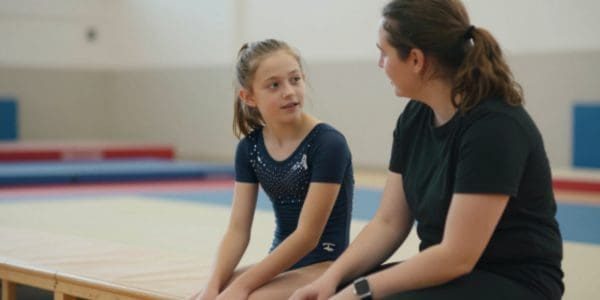
Is your young gymnast losing skills, developing blocks, or struggling with the mental pressure of the sport?
Gymnastics places enormous psychological demands on youngsters. With perfectionism, performance anxiety, skill blocks and body image concerns are all common. We help young gymnasts and the adults supporting them navigate these challenges.
Youth Gymnastics Psychology | Mental skills support for gymnasts aged 7–21+ and the parents and coaches helping them thrive
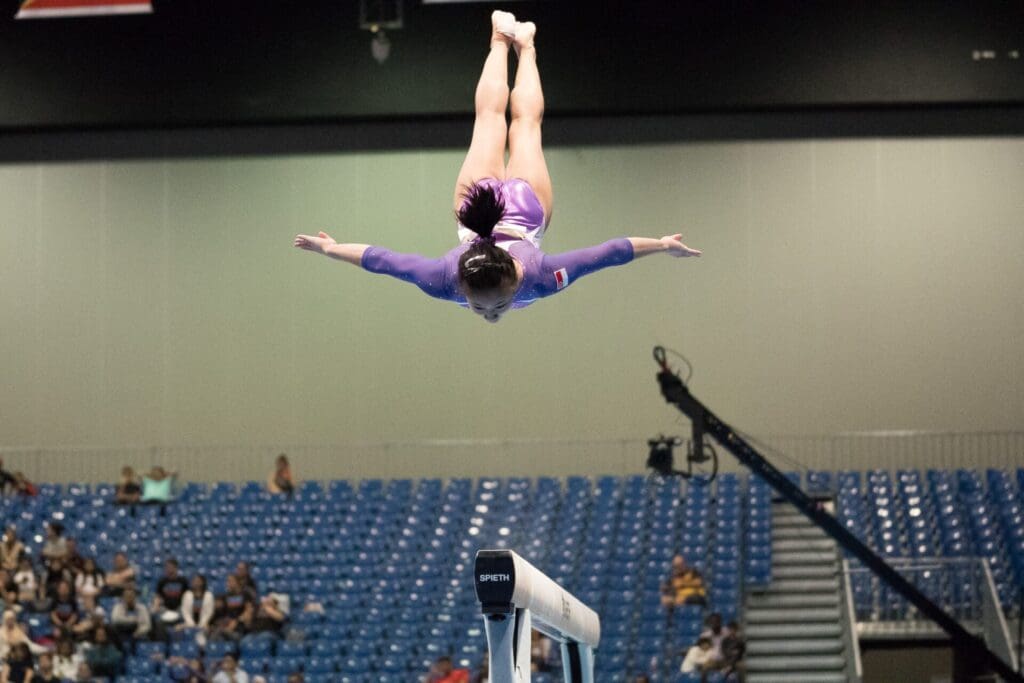
Understand what’s really going on for your child and learn how to have the right conversations when they’re struggling with nerves, blocks or self-doubt.
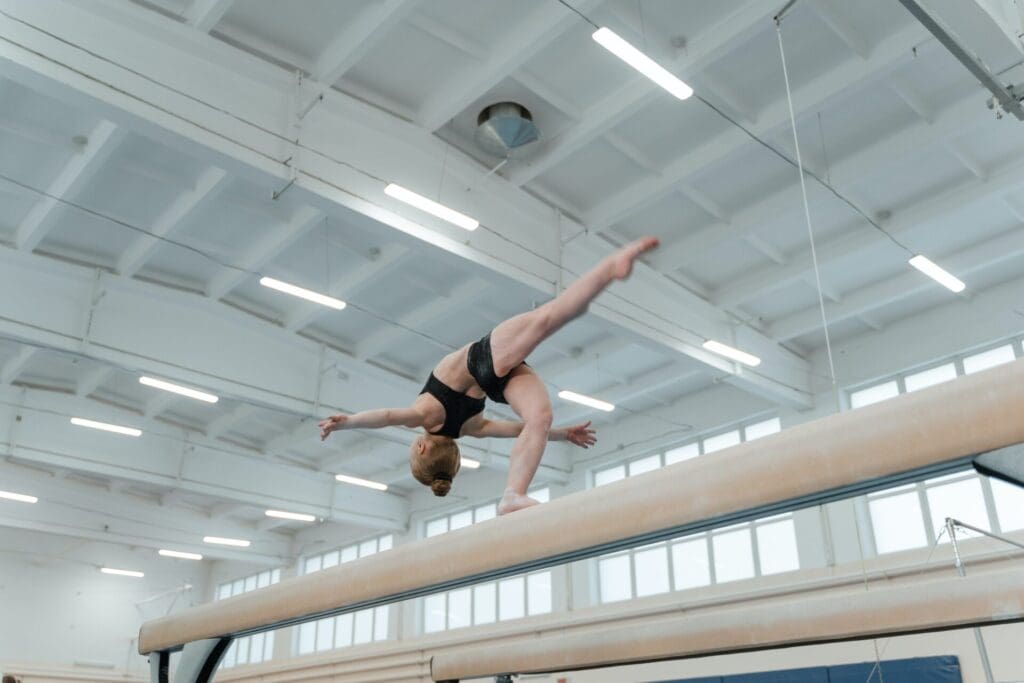
Practical psychological tools you can bring into your sessions to help young gymnasts build resilience, manage perfectionism and perform with a clear, focused mind
Why mental skills matter in gymnastics
Gymnastics is unique. Young gymnasts spend hundreds of hours perfecting skills that must be executed under intense pressure alone, in silence, in front of judges. Unlike team sports, there is nowhere to hide and sometimes no teammate to share the burden. The psychological demands are enormous, even for very young gymnasts.
The mental challenges in gymnastics go beyond nerves. Skill blocks where a gymnast suddenly cannot perform a move they have done hundreds of times are one of the most distressing experiences a young person in sport can have. Perfectionism, if left unchecked, can rob young gymnasts of their enjoyment. Driving them toward burnout long before they reach their potential. Body image pressures, which are more prevalent in gymnastics than almost any other sport, require careful and sensitive handling by both parents and coaches.
The good news is that every one of these challenges responds well to the right psychological support.
We work with young gymnasts aged 7 to 21+ and the parents and coaches alongside them. Building the mental skills that turn pressure into great performances.
Common challenges we deal with
“Our daughter developed a mental block on beam and was devastated. Within a few sessions she had strategies to manage her anxiety and her confidence came back. We wish we’d found this support sooner.” – Parent of a 13-year-old gymnast, West Yorkshire, England
Articles for parents & youth coaches
Podcast Episodes to Listen Too
Questions Parents Ask Us
My child has suddenly lost a skill they could do perfectly — what's happening?
This is called a psychological block, and it is far more common in gymnastics than most parents realise. It is not a technique issue it is a mental skills issue, usually triggered by anxiety or a loss of trust in the body’s automatic processes. Mental blocks can respond well to the right psychological support, and most gymnasts we work with are able to work through their blocks effectively. However, lots of patience is most definately required.
My young gymnast is a perfectionist and it is taking all the joy out of the sport — what can we do?
Perfectionism is one of the most common issues we see in gymnastics. In the short term it can drive high standards, but left unchecked it leads to anxiety, fear of failure and eventually burnout. We help young gymnasts develop a healthier relationship with mistakes and imperfection. One that allows them to keep improving without the constant pressure of needing everything to be perfect.
I'm worried about body image pressure in gymnastics — how do I talk to my child about it?
This is something many gymnastics parents think about but find difficult to raise. The way you talk about your child’s body and how their club talks about it has a significant impact on their long-term relationship with themselves and the sport. Our resources give you specific, age-appropriate language and approaches for these sensitive conversations.
My gymnast is terrified of competitions but loves training — is this normal?
This is very common. The gap between how a gymnast performs in training versus competition is almost always a mental skills issue. The added meaning of competition; judges, parents watching, results that matter triggers anxiety that disrupts otherwise automatic skills. This is very addressable with the right support.
How do I know if my child is burning out, and what should I do?
Early signs of burnout in young gymnasts include loss of enjoyment, reluctance to go to training, increased irritability, physical complaints without clear cause, and a drop in performance. If you are seeing these signs, it is worth seeking support sooner rather than later. We work with gymnasts and their families to address the roots of burnout before it leads to them leaving the sport entirely.
At what age should my child start working on the mental side of gymnastics?
We work with gymnasts from age 7 upwards. In gymnastics particularly, mental habits form very early. A young gymnast who learns to manage mistakes and pressure from a young age builds a foundation that serves them well in their lives and at school or college. Not just in the gymnasium. It is never too early, and it is never too late.