
Is your young golfer struggling with the mental side of the game?
Whether your child falls apart after a bad hole or can’t transfer their golf game from the driving range to the course we can help. We’ve supported junior golfers for over a decade, and we understand the unique psychological demands golf sport places on young players.
Youth Golf Psychology | Mental skills training for junior golfers aged 7–21+ and the parents and coaches alongside them
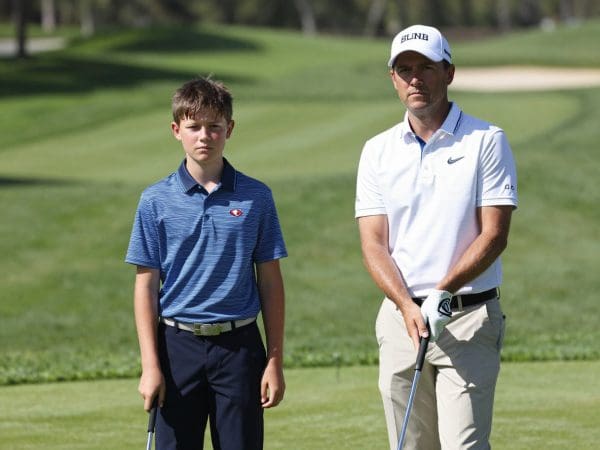
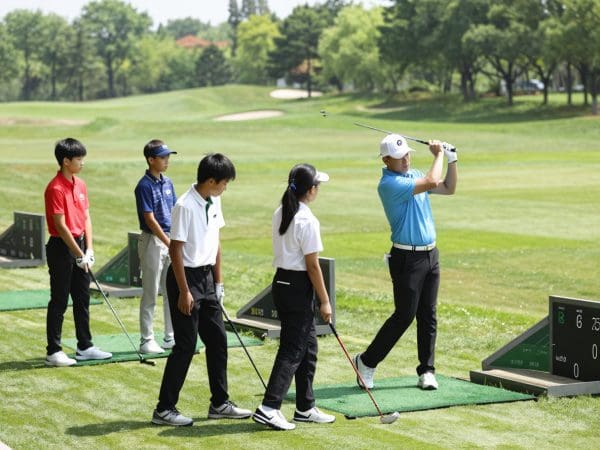
Understand why your child plays brilliantly in practice but struggles on the course. As well as how to have the right conversations at exactly the right moments.
Practical mental skills tools you can use on the range and on the course to help young golfers build real confidence and compete without overthinking.
Why mental skills matter in junior golf?
Golf is one of the most mentally demanding sports a young person can play. Unlike almost every other sport, there’s no team to hide behind, no coach on the touchline, and no timeouts. Between shots, a young golfer is alone with their thoughts. That space is where confidence is won or lost.
Research consistently shows that the mental game accounts for a significant proportion of performance at all levels. Consequently the habits formed in junior golf can shape how a player goes about their golf in adulthood. The earlier those habits are built, the better. We work with young golfers aged 7 to 21+ to develop the psychological skills that make their technical game stand up to severe pressure.
Common challenges we help young golfers with
“Our daughter was convinced she couldn’t putt under pressure. Within a few session she had a pre-shot routine and a completely different mindset. Her handicap has dropped four shots.” — Parent of a 16-year-old junior golfer, Cheshire, England
Popular Golf Articles for Parents & Youth Golf Coaches
Important Golf Podcast Episodes to Listen To
Questions Parents Ask Us
My child plays brilliantly in practice but falls apart in competitions - WHY?
This is the most common issue we work on with junior golfers. The range-to-course gap is almost always a mental skills issue. Specifically we look at focus, practice and pre-shot routines, and handling the added meaning that competition brings. Which is very much addressable.
How do I talk to my child about a bad round without making things worse?
Almost every golf parent worries about this. The car journey home after a round or tournament is one of the most important moments you have. Our parent resources give you specific language and approaches for those conversations.
At what age should my child start working on golf psychology?
We work with junior golfers from age 7 upwards. Golf is unusual in that mental habits form very early. For example a 10-year-old who learns to reset after a bad hole is building a life skill that will serve them well on and off the golf course.
My child obsesses over their swing even when it's working — is this a problem?
Perfectionism and swing obsession are very common in junior golfers and many adults too! Especially the more technically-minded ones. If this is left unchecked, it can significantly limit performance and enjoyment. We help young golfers find the balance between technical improvement and trusting their game.