
Is your young goalkeeper struggling with nerves, self-doubt or bouncing back from mistakes?
Goalkeeping is one of the most psychologically exposed positions in all of sport. Every mistake your child makes is immediately visible to everyone watching. Teammates, opponents, parents, coaches and spectators. Every save is noticed. And between those moments of action, a goalkeeper must stay mentally sharp and physically ready for long periods where they may not touch the ball.
We support goalkeepers from the motivated and talented youngster right through to the highly skilled elite professional. Whether your child is losing confidence after a bad game, struggling to let go of mistakes during a match, getting extremely nervous before they play, or finding it hard to focus for the full ninety minutes, we can help. And if you are a parent who wants to support your young goalkeeper more effectively, or a goalkeeping coach who wants to add a mental skills dimension to your sessions, you are in exactly the right place.
Mental skills support for junior goalkeepers aged 7–21+ and the parents and coaches standing beside them
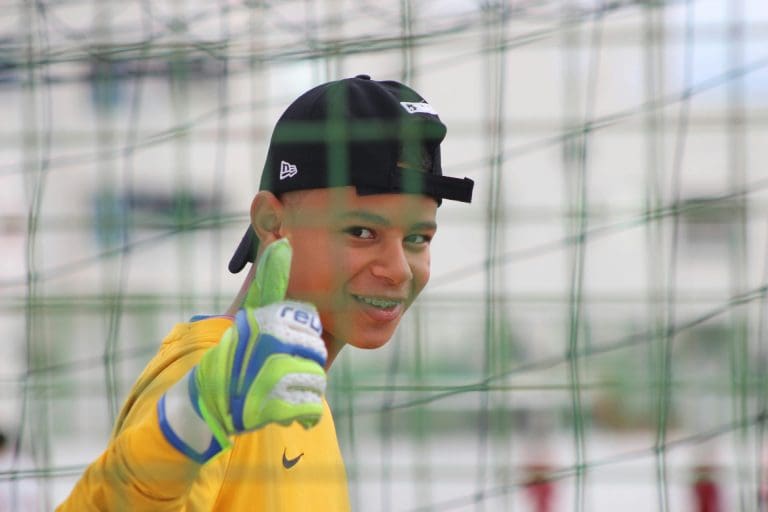
Understand what is really happening in your young goalkeeper’s mind before matches, after mistakes, and during the difficult moments. Learn how to have the right conversations at exactly the right times.
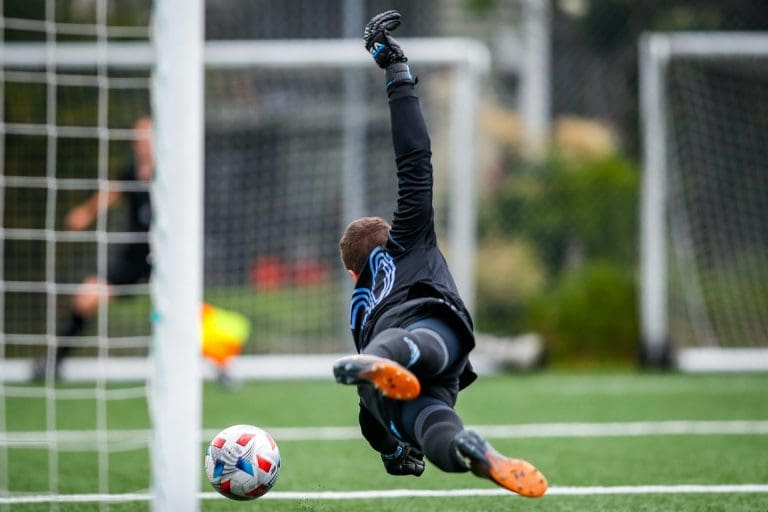
Practical mental skills tools you can build into your goalkeeping sessions helping young keepers develop real confidence, composure under pressure, and the ability to stay focused for the full match.
Why mental skills matter for young goalkeepers
Goalkeeping demands a very particular kind of mental strength. A young goalkeeper can go twenty minutes without touching the ball and then be required to make a critical save or a split-second decision that determines the outcome of a match. Maintaining concentration, confidence and composure through those long periods of inactivity, and then switching instantly into full performance mode, is an enormous psychological challenge for any young person.
The position also carries a weight of responsibility that young outfield players rarely face. When a goalkeeper makes a mistake, it often directly results in a goal. That visible, consequential nature of goalkeeping errors can make young keepers hypersensitive to mistakes. This can then lead to perfectionism, anxiety, and a loss of the natural, instinctive confidence that the position demands.
The good news is that every one of these mental challenges is trainable. Goalkeepers who learn to manage mistakes well, stay focused over ninety minutes, trust their skills under pressure, and maintain confidence through difficult patches are not born with those qualities, they develop them. We support many young goalkeepers aged 7 to 21+ and the parents and goalkeeping coaches alongside them to build exactly those skills.
My Child Gets Very Nervous Before Matches — What Should I Do?
Common challenges we deal with
“Our son was conceding a goal and carrying it for the whole game. He had strategies now to reset and move on. His coach said he has become one of the most composed keepers in the league for his age group.” – Parent of a 12-year-old goalkeeper, Southampton, England
Helping Boost Young Goalkeepers' Self Confidence
Articles for parents & goalkeeper coaches
Boosting The Resilience of Young Goalkeepers
Does your young goalkeeper dwell on mistakes during a match? The moment a goal goes in or an error is made, what happens next in their head is everything. In this short video David shares three practical techniques any goalkeeper can use immediately including how to visualise a calm, composed response before a match even starts, how to become your own inner coach rather than your own harshest critic, and a simple body-based focus technique to use during stoppages in play. Five minutes that could change how your goalkeeper responds to the inevitable difficult moments in every game.
Podcast Episode To Listen To
Questions Parents Ask Us
My child gets extremely nervous before every match in goal — is this normal?
Pre-match nerves are very common in young goalkeepers, and more intense than in most outfield positions. The isolated, high-responsibility nature of the role means that anxiety tends to feel bigger and more personal. The good news is that nerves are manageable. We help young keepers develop pre-match routines and mental strategies that convert anxiety into readiness rather than letting it undermine their performance.
My young goalkeeper cannot let go of mistakes during a game — what can we do?
Dwelling on mistakes mid-game is one of the most damaging things a goalkeeper can do, because the position requires constant readiness and focus. It is also one of the most common issues we work on. We help young keepers develop a specific mistake-response routine a short, reliable mental reset that allows them to acknowledge an error and move on quickly, rather than carrying it through the rest of the match.
My child plays brilliantly in training but falls apart in matches — why?
The training-to-match gap is one of the most common reasons parents and coaches come to us. In training there are no consequences, no crowd and no scoreline pressure. Therefore the brain stays calm and skills flow automatically. In matches, the added pressure triggers anxiety that disrupts those same automatic skills. This is a mental skills issue, and it is very addressable with the right support.
How do I talk to my child after they have had a bad game in goal?
The conversation after a bad game especially in the car on the way home is one of the most important moments a parent has. The wrong approach can deepen a young goalkeeper’s anxiety and self-criticism; the right approach can help them process the experience and come back stronger. Our parent resources give you specific language and approaches for exactly these moments.
My young goalkeeper's warm-up has to go perfectly or their confidence collapses — what is this?
This is a very specific and common form of perfectionism in goalkeepers, and we have written about it directly. When a young keeper ties their confidence to their warm-up performance, any small error before the match has already undermined them before kick-off. We help young goalkeepers build confidence that is process-based and internally anchored not dependent on everything going perfectly.
My child is being watched by academy scouts and the pressure is affecting their performance — what can we do?
Academy scrutiny is one of the most acute sources of pressure a young goalkeeper can face. We work specifically with young keepers at this stage of their development helping them manage the additional pressure of being observed and evaluated, and perform to their true ability when it matters most.
At what age should a young goalkeeper start working on their mental game?
We work with young goalkeepers from age 7 upwards. Because goalkeeping carries such specific psychological demands the visibility of mistakes, the long periods of inaction and the weight of responsibility. Building mental skills early is particularly valuable in this position. The sooner good habits are established, the stronger the foundation for everything that follows. There is also an argument to say we are teaching life skills through the vehicle of goalkeeping.