
Burnout in football is physical, emotional and mental exhaustion that can follow sustained high stress and pressure. It can affect players, coaches and support staff, with motivation and performance declining, enjoyment fading and sleep suffering. In this episode, club doctor Dr Andrew Shafik shares insights and solutions.
Meet Dr Andrew Shafik
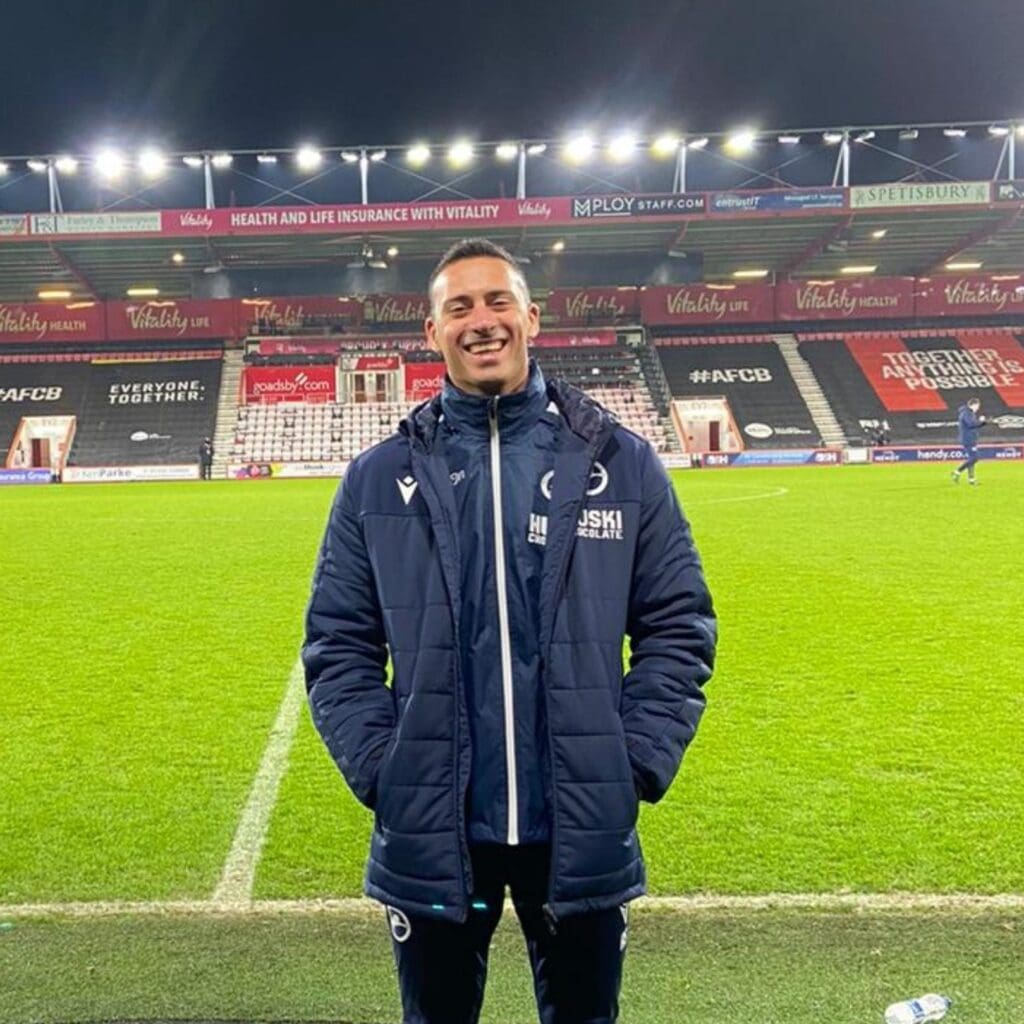
Dr Andrew Shafik is a doctor working in football as Lead Academy Doctor at Millwall FC and a doctor at Chelsea FC.
He was educated at the University of Aberdeen where he graduated with a Medical degree and Sport & Exercise Science degree. Andrew also pursued further studies achieving a distinction in an MSc in Sport and Exercise Medicine at the University of Leeds where he was awarded the Sport & Exercise Medicine prize for 2020/2021. He also holds a Diploma in MSK Medicine and is a Member of the Faculty of Sport and Exercise Medicine.
Andrew has a special interest in football medicine and performance education with roles as Senior Editor and Podcast Lead at the FMPA and Assistant Secretary at the FA Medical Society.
If you’ve got to the point where you’ve experienced physical, emotional and mental exhaustion you may have experienced burnout. This can happen to people who are subjected to high levels of stress and pressure over a sustained period of time. In elite sport prolonged and intense involvement as an athlete, coach or support member can push you in this direction where your motivation and performance levels can naturally decline. In addition, your psychological well-being and mental health can also be a cause for concern where you can lack enjoyment in what you do, become more irritable with others and have difficulty sleeping at night.
In today’s episode Dr. Andrew Shafik, a club doctor at Millwall and Chelsea Football clubs goes on share some fascinating insights where we chat about what players, coaches and support staff, can go on to experience. We also share solutions to some of the challenges that people face.
Key Learnings
- Sports medicine side is connected with understanding injuries and illness. As a doctor of performance medicine, Andrew seeks to work out how we can utilise our experiences of working within a multi-disciplinary team to maximise the performance and well-being of athletes, coaches or staff.
- Sports psychologists can be very helpful in assisting medical staff to manage players to an optimal level during their rehabilitation and recovery.
- Culture and the environment can play a huge part in burnout and the well-being of staff.
- Your age, stage of career, gender, culture and relationships can impact your mental health.
- Understanding your levels of mental toughness and other characteristics can be helpful from a self-awareness angle and ensure that you make smarter decisions.
Popular questions about burnout in football
What is burnout in football?
Burnout is physical, emotional and mental exhaustion that can build up under sustained high stress and pressure. In elite football it can affect players, coaches and support staff, and can lead to declining motivation and performance.
What are the signs of burnout in footballers?
Signs include falling motivation and performance, losing enjoyment, becoming more irritable with others and difficulty sleeping. If these persist, speak to your GP or club medical team.
What increases the risk of burnout in football?
Dr Shafik points to culture and environment, and says age, stage of career, gender, culture and relationships can all affect mental health. Prolonged, intense involvement as a player, coach or support staff member can push people towards burnout.
Connect with David Charlton
Join David @ The Sports Psychology Hub
Connect with Dr Andrew Shafik
Football Medicine and Performance Association Podcast with Steven Reid
Relevant Podcast Episodes
Ep065: Dr Amy Izycky – Encouraging Mentally Healthy Cultures in Sport
Ep066: Marilyn Okoro – Mental Health and Resilience: Lessons from an Olympic Medalist
Ep113: Polly Brennan – The Relationship Between Mental Fitness, Mental Health and Mental Toughness
Ep123: Richard Dorney MBE – Supporting People: What Can You Learn About Resilience From The Military
Ep158: Dr Paul Gorczynski – How to Develop and Implement Mental Health Literacy Strategies
Relevant Blogs
Blog – Make Better Decisions to Help Your Sport Performance
Blog – 5 Ways to Create a Psychological Safe Sporting Environment
Blog – 3 Tips to Deal with Bullying in Sport
Blog – Creating a Mentally Healthy Sporting Environment
Blog – Life After Professional Sport and its Challenges
Other Resources
IF YOU ENJOYED TODAY'S SHOW PLEASE SHARE
SUBSCRIBE AND LISTEN ON YOUR FAVOURITE AUDIO PLATFORM


Also, kindly consider taking the 60-seconds it takes to leave an honest review and rating for the podcast on iTunes, they’re extremely helpful when it comes to the ranking of the show and we read every single one of them!

Best Wishes
David Charlton
Global Sports Psychologist who is located near Newcastle Upon Tyne, UK and willing to travel Internationally. David also uses online video conferencing software (Zoom, Facetime, WhatsApp) on a regular basis and has clients who he has supported in USA, Canada, South America, UAE, Australian and New Zealand.
Managing Director – Inspiring Sporting Excellence and Founder of The Sports Psychology Hub. With over 10 years experience supporting athletes, coaches, parents and teams to achieve their goals, quickly.
Transcript
How to Prevent Burnout in Elite Professional Football to Maximise Performance
Demystifying Mental Toughness Podcast with Dr Andrew Shafik
Introduction – David Charlton
This is the Demystifying Mental Toughness Podcast, hosted by me, David Charlton.
Whether you’re listening to build your own mental toughness or to better support other people, athletes or clients, my aim is to help you understand this fascinating and developable personality trait and how it can influence performance and wellbeing.
Hi, I hope you’re well and you’ve had a good week.
I’m continuing the theme from last week’s episode, where we explored mental health literacy in sport.
This time, my guest is Dr Andrew Shafik, and we’re discussing burnout, wellbeing, mental health and mental toughness in elite professional football.
Andrew is a club doctor who has been involved with Millwall and Chelsea Football Clubs, and he shares some fascinating insights into the demands experienced by players, coaches and support staff within elite football environments.
Enjoy.
Dr Andrew Shafik's Background in Sport and Exercise Medicine
David: Andrew, it’s nice to meet you. Thank you for agreeing to be a guest on the podcast. Could you explain a little about your background and your interest in elite professional sport?
Andrew: Thanks for having me, David.
I studied medicine at the University of Aberdeen, where I also completed an integrated degree in Sport and Exercise Science.
I’ve always had an interest in sport from a young age, particularly football. During university, I was fortunate enough to play semi-professionally.
Towards the second half of university, I started thinking seriously about which areas of medicine interested me and what career path I wanted to take.
My Sport and Exercise Science degree, which I completed between the third and fourth years of my medical studies, really confirmed my interest in the performance side of medicine.
I started doing some shadowing in Aberdeen with the academy doctor at the time, who went on to become Aberdeen’s first-team doctor. Alongside playing semi-professional football, that’s really where everything started.
Once I began working, I continued gaining experience and completed a Master’s degree in Sport and Exercise Medicine at the University of Leeds.
From there, opportunities presented themselves and my interest in the field has continued to grow.
What Is Sport and Exercise Medicine?
David: Can you explain the difference between Sport and Exercise Medicine and the sports science side of professional sport?
Andrew: Sport and Exercise Medicine became a recognised medical specialty in the UK in 2005, around the time London was awarded the Olympic Games.
There had already been many medical practitioners working within sport, but often on a special-interest basis rather than through a recognised specialist pathway.
Sport and Exercise Medicine broadly involves three components.
The first is elite sport.
The second is musculoskeletal medicine, which overlaps to some extent with orthopaedics, although it tends to focus more on non-surgical treatment.
The third is exercise medicine, which looks at physical activity in the prevention and treatment of chronic diseases such as diabetes, hypertension and high cholesterol, as well as conditions such as depression.
Sport and Exercise Science is more concerned with the science underpinning performance.
Within elite sport, however, these disciplines work together.
I tend to distinguish between sports medicine and performance medicine.
Sports medicine focuses more directly on understanding and treating injuries and illnesses.
Performance medicine asks a slightly different question:
How can we use our medical expertise alongside the wider multidisciplinary team to maximise the performance of athletes and, where possible, staff?
The Growing Role of Sport Psychology in Professional Football
David: As a sport psychologist, I’ve seen significant changes in how psychology is integrated into injury management. Have you noticed the role of sport psychologists changing within professional football?
Andrew: Definitely.
The demands within elite sport have increased considerably.
If you compare today’s environments with those of 10 or 15 years ago, medicine and performance departments are much larger.
People with greater experience in the industry often talk about how, in the late 1990s, there may have been only one or two practitioners involved, perhaps a physiotherapist and a doctor on matchdays.
Now we have much larger multidisciplinary teams.
From a sport psychology perspective, some clubs use psychologists on a consultancy basis, while others employ them full-time.
Their role can also span different areas of a club, including:
- Men’s first teams
- Women’s teams
- Boys’ academies
- Girls’ academies
- Coaches and support staff
The precise role depends on the organisation.
Their influence is growing, and rightly so, because we’re increasingly recognising that performance isn’t solely about physical preparation.
There is also a significant mental preparation component, and that’s where sport psychologists can be hugely valuable within the multidisciplinary team. 159-how-to-prevent-burnout-in-e…
Long-Term Injury and Athlete Mental Health
David: When we think specifically about injury, do you feel techniques such as mindfulness and relaxation are valued more now within professional football?
Andrew: I think this is probably an area where we could still do more.
As practitioners, we don’t necessarily sit in on each other’s consultations, so much of the evidence we see comes through subjective feedback from athletes rather than directly observing what another practitioner is doing.
Where I think psychology can become particularly valuable is with longer-term injuries.
Injury definitions vary, but if we consider an injury keeping an athlete out for approximately 28 days or more, that’s a significant period.
For an athlete, their sport is effectively their function.
If you’re a builder with back pain, we want to maximise your ability to function in your occupation.
For an elite athlete, their function is competing.
If an injury prevents them from doing that for four weeks, three months, six months or longer, we’ve taken away a major part of their normal life.
That’s where we need to think holistically and bring in the multidisciplinary team.
The athlete might spend one, two or three hours each day with medical staff completing rehabilitation, but there’s a huge amount of time outside that.
We therefore need to consider their psychological wellbeing and mental readiness so they’re supported during rehabilitation and properly prepared when they eventually return to competition.
Injury Can Affect an Athlete's Identity
David: Serious injury can also interfere with an athlete’s sense of identity.
When somebody is out for three, six or twelve months, their self-esteem and wellbeing can take a significant hit.
Andrew: Absolutely.
It’s important to distinguish between mental health, burnout and wellbeing, although they can interact.
We know from healthcare research that burnout and mental health difficulties can affect large numbers of practitioners.
And that’s relevant to elite sport because we shouldn’t focus solely on athletes.
Support staff need support too.
Sport psychology can be invaluable for coaches, medical practitioners and performance staff, as well as players.
Why Burnout Isn't Only a Player Problem
David: I’m pleased you mentioned support staff.
High-performance environments contain seriously driven people.
Whether we’re talking about players, coaches or sports scientists, these are often people who, when they say they’re going to do something, follow through.
That can become a challenge in itself because sometimes they need to rein themselves in.
Andrew: Definitely.
Players and support staff experience different pressures, although there are common themes.
These can include:
- Workload
- Salary and financial concerns
- Annual leave
- Missing weddings, birthdays and important family occasions
- Feeling supported or unsupported by senior leadership
- Whether people feel listened to
- Opportunities for learning and development
- Organisational culture
- Relationships with colleagues and teammates
- Relationships with agents
- Career uncertainty
And these pressures can vary depending on the environment.
There can be different challenges within the men’s and women’s games, academy and senior football, club and international football, and at different stages of someone’s career.
Retirement and transitioning out of professional football can create another completely different set of challenges.
Transfers, Uncertainty and Player Wellbeing
David: Another factor is how frequently footballers move around.
Players may move between clubs, countries and cultures, which can have a huge impact.
Andrew: Absolutely.
Think about transfer deadline day.
You hear stories about players sitting in airports not knowing where they’re going to be playing next.
For supporters watching Sky Sports News, that can create excitement.
For the player, it’s a huge amount of uncertainty.
They may have a partner, children and an established life somewhere.
Suddenly they don’t know where the next stage of their career is going to take them.
Different athletes will manage that uncertainty differently.
The challenge for practitioners is recognising who may need additional support.
And importantly, athletes who need support won’t always ask for it. 159-how-to-prevent-burnout-in-e…
Should Psychological Support Be Inside or Outside the Football Club?
Andrew: Something I’m particularly interested in is whether psychological and welfare support should sit inside or outside the organisation.
Should clubs have a designated psychologist, counsellor or welfare practitioner internally?
Or could there be benefits to somebody independent of the organisation?
I don’t necessarily have the answer, but it’s an interesting question.
David: I see advantages to being external.
As an independent sport psychologist, trust, confidentiality and the relationship with the player are essential.
Sometimes players appreciate knowing that you’re not directly connected to the club.
They can feel more comfortable knowing that what they discuss isn’t going to get back to the manager, coach or other support staff.
That can become particularly important in team sports where the manager ultimately decides who plays.
Andrew: I think there’s a place for both.
Some people benefit from speaking to someone inside the organisation because that practitioner already understands the environment and context.
Others may prefer somebody completely independent because they feel there is greater separation from the organisation.
Different people will respond differently.
Spotting the Early Signs That Someone Is Struggling
David: There’s probably also something to be said for doctors, physiotherapists and coaches developing stronger listening and communication skills.
An understanding of approaches such as motivational interviewing can help practitioners empathise and listen more effectively.
Andrew: I completely agree.
This perhaps takes us back to the distinction between sports medicine and performance medicine.
Sports medicine might involve somebody coming to you and saying:
“I’m feeling low.”
or:
“I’m burnt out.”
Performance medicine may involve recognising something before the person tells you directly.
Perhaps a player is rehabilitating with a physiotherapist and isn’t engaging in their usual way.
Their body language looks different.
Maybe they’re normally somebody who walks in, shakes your hand, gives you a fist bump and asks how your day is.
Today they arrive a couple of minutes late and something simply feels different.
It’s about recognising those subtle changes and then deciding what action might be appropriate, including when to involve other members of the multidisciplinary team. 159-how-to-prevent-burnout-in-e…
Mental Toughness, Burnout and Mental Health
David: You’ve mentioned mental toughness several times, and obviously it’s the name of this podcast.
How would you define mental toughness within an elite football environment?
Andrew: It’s something I’ve thought about much more recently as my interest in burnout and wellbeing has developed.
One thing I’ve learned is that there are distinctions between:
- Mental toughness
- Mental health
- Burnout
- Wellbeing
They’re interconnected, but they aren’t necessarily the same thing.
For me, mental toughness relates to being able to perform under continual stress and pressure.
Burnout can involve physical, emotional and psychological exhaustion, alongside deterioration in performance.
Mental health is broader and includes emotional, psychological and social wellbeing.
Something I learned during a psychiatry placement was the importance of understanding the whole person.
As practitioners, we only see part of an athlete’s life.
They may be with us for half a day, but we don’t necessarily know what’s happening at home or elsewhere in their life.
And that’s true of colleagues in any workplace too.
Creating Psychological Safety in Elite Sport
David: Part of mental toughness is interpersonal confidence: being able to communicate effectively.
We’re going to encounter players and staff who aren’t naturally comfortable talking about their feelings.
Knowing the individual and developing a strong relationship can hopefully make it easier for them to open up.
The difficulty within high-performance football is:
How much does somebody really want to disclose?
Andrew: That’s where creating safe spaces becomes important.
It’s connected to what we discussed earlier about whether somebody speaks to an internal or external practitioner.
Culture matters.
Communication matters.
And having an identified person who people know they can approach can be extremely valuable.
Does Wellbeing Need to Start at Board Level?
Andrew: A friend of mine works in Australia, and one aspect of their system that interested me was having somebody at board level specifically responsible for staff welfare.
That sends a message about how seriously the organisation takes wellbeing.
We’ve talked about:
- Culture
- Safe spaces
- Communication
- Designated support
Having responsibility represented at senior leadership level can be important.
David: And that links directly to an organisation’s values.
How seriously does the club genuinely take staff wellbeing and player welfare?
Why Doing More Isn't Always the Answer
David: Self-care is also incredibly important for practitioners and coaches.
Managers and coaches operate under extreme pressure and can lose their jobs within months.
Andrew: Football often has a culture where the response to something going wrong is:
Do more.
Work longer.
Be more available.
Put more hours in.
And that’s not unique to football.
However, continually adding more time isn’t necessarily the solution.
People miss weekends, birthdays and important events, and the demands can accumulate.
That’s why we need to think much more carefully about burnout and wellbeing among support staff as well as players.
Reflection and Peer Support Can Protect Wellbeing
David: There’s a similarity with self-employment and entrepreneurship.
When you aren’t working a traditional nine-to-five role, there can be a tendency to keep doing more and more.
These roles can also become lonely.
Having a support network around you that can recognise when you’re falling into that trap is important.
Self-awareness is vital too.
Andrew: That reminds me of something I experienced during psychiatry called a Balint group.
Essentially, practitioners come together in a safe environment and somebody presents a case or challenging interaction.
The group reflects on it together, asks questions and considers different perspectives.
That brings together several things we’ve discussed:
- Communication
- Reflection
- Peer support
- Learning from experience
Reflective practice helps us consider why we found a situation challenging, how we responded, and what we might do differently next time.
As we accumulate experience, hopefully we become better equipped to deal with similar situations in the future.
Three Ways Elite Football Can Better Protect Mental Health and Wellbeing
David: You’ve shared some fascinating insights. Could you leave listeners with three key takeaways?
Andrew: The first is culture.
A lot of this starts at the top.
When the right culture comes from senior leadership, I believe it filters throughout the organisation.
The second is having a designated point of contact for welfare, wellbeing, mental health or psychology.
That could be internal, external, or potentially a combination of both.
People need to know who they can speak to.
The third is open communication.
That could involve reflective practice, shared decision-making, peer discussions or communicating directly with that designated support person.
If we can strengthen those three areas, we can better support the mental aspects of both athletes and staff within elite-performance environments. 159-how-to-prevent-burnout-in-e…
David's Reflections: Can Mental Toughness Have a Downside?
A big thank you to Andrew for his time.
Our conversation got me thinking about mental toughness and some of the qualities we typically associate with mentally tough people.
Elite sport is full of highly committed and motivated individuals.
Players, coaches and support staff can live and breathe football.
Commitment is clearly valuable.
Then we have Confidence.
Believing in your ability and backing yourself under pressure is another valuable quality.
Next comes Challenge.
Some mentally tough people enjoy taking risks, tackling difficult situations and embracing new challenges.
Again, there are clear benefits.
Then we have Control, including emotional control.
Some people don’t openly show what they’re experiencing emotionally.
Put these ingredients together and we may well see a mentally tough person.
But there’s another question worth asking:
What are the potential downsides of your strengths?
If you’re highly committed:
Do you take on too much?
If you’re confident:
Can you become overconfident or reluctant to ask for help?
If you enjoy challenge:
Can you take too many risks?
And if you’re very emotionally controlled:
Would anybody actually recognise when you’re struggling?
Mental toughness can be hugely beneficial.
But the key, as I say regularly on this podcast, is self-awareness.
Understanding our strengths also means recognising the circumstances where those strengths can become liabilities. 159-how-to-prevent-burnout-in-e…
Key Learnings: Preventing Burnout in Elite Professional Football
For players, coaches and practitioners, this conversation leaves us with several important messages:
- Burnout isn’t solely an athlete issue. Coaches, medical practitioners and performance staff operate under significant pressure too.
- Long-term injury requires psychological as well as physical rehabilitation. Losing the ability to train and compete can affect identity, wellbeing and confidence.
- Know the person, not only the performer. Changes in behaviour, engagement and body language may provide early clues that somebody is struggling.
- Psychological safety matters. People need environments where they feel able to communicate without fearing the consequences.
- Culture starts at the top. Wellbeing needs genuine organisational support rather than simply being talked about.
- More work isn’t always better. High performers can respond to difficulty by working even harder, potentially increasing burnout risk.
- Mental toughness doesn’t make someone invulnerable. Some characteristics associated with mental toughness may actually make distress harder for other people to recognise.
- Self-awareness is crucial. Knowing when a strength is being overused can protect both performance and wellbeing.
Final Thought
Perhaps one of the most important messages from this conversation is that high performance and wellbeing shouldn’t be treated as competing objectives.
Supporting wellbeing isn’t about lowering standards.
It’s about creating an environment where talented, highly committed people can perform sustainably.
And in elite professional football, where pressure, uncertainty and expectations are exceptionally high, that distinction matters.