



How to Create a Culture of High Performance in Professional Rugby Union

EP 161 Episode Cover Paul Phillips

How to Create a Culture of High Performance in Professional Rugby Union

Paul Phillips

Paul Phillips | Founding Member, Board of Advisors: High-Performance Rugby Union | Coach Educator | Performance Rugby Consultant | Performance Coach Author.

With more than 17-years experience working with players, coaches, clubs, regions and organisations – as a Performance Coach, Educator and Consultant. With purpose, to positively influence growth, in many forms, to achieve individual and team development, progress, and success.

In episode #161 I chat with Author, Coach Educator and Performance Rugby Consultant, Paul Phillips.  We discuss his experiences of developing high performance cultures in professional rugby.  Paul also shares some research on tackling and how to overcome fears with helpful triggers as well as other fascinating insights.

Key Learning Points:

  • In Rugby at the lower levels fear is very prominent.
  • Establishing values and behaviours that are coupled with a vision for the team and club is an essential part of culture development.
  • Why can’t we generate behaviours before thoughts and emotions?
  • James Clear’s two-minute rule in the book Atomic Habits is a good way to start to develop habitual behaviours.
  • The size of the opponent in rugby can be a big factor in activating fear.
  • Visual, kinaesthetic and auditory cues and triggers are helpful in dealing with fear when tackling.
  • Using metaphors such as images of animals or superhero’s is a helpful trigger for adults and children.
  • The development of positive relationships between players and coaches is a hallmark of high performing teams.
  • Extrinsic environments are rife largely down to the way messages are communicated from senior staff and coaches in clubs and organisations.
  • Too much focus on external factors results in lower emotional control.

Connect with Paul Phillips

LinkedIn

Book: How to Create Culture: In Rugby Union

Connect with David Charlton

Sign Up to The Mental Edge

Join David @ The Sports Psychology Hub

Instagram, Facebook, Twitter and LinkedIn

To Listen to Rugby Orientated Podcast Episodes

Ep039: John Fletcher – How to Develop Fearless Athletes

Ep094: Professor Adam Nicholls – How to Develop Mentally Strong Rugby Players

Ep104: Seb De Chaves –  The Psychological Demands of Elite Professional Rugby

Ep127: Paul Trainor – The Application of Mental Toughness Training in Elite Professional Rugby League

EP147: Aaron Walsh – The Application of Mental Performance Coaching in Elite Professional Rugby

Ep153: Rugby Psychology Compilation – 25 Ways You Can Improve Your Performance

Helpful Rugby Orientated Resources

Blog – Overthinking on the Rugby Pitch

Blog – Are You A Rugby Player With Perfectionist Tendencies?

Case Study – Supporting a Rugby Player to Overcome Self-Doubt

Blog – Playing Rugby at Your Best Under Pressure

Blog – 5 Ways to Create a Psychological Safe Sporting Environment

Rugby Psychology | Mental Skills for Rugby Resources

IF YOU ENJOYED TODAY'S SHOW PLEASE SHARE

SUBSCRIBE AND LISTEN ON YOUR FAVOURITE AUDIO PLATFORM

Also, kindly consider taking the 60-seconds it takes to leave an honest review and rating for the podcast on iTunes, they’re extremely helpful when it comes to the ranking of the show and we read every single one of them!

David Charlton

Best Wishes 

David Charlton

Global Sports Psychologist who is located near Newcastle Upon Tyne, UK and willing to travel Internationally.  David also uses online video conferencing software (Zoom, Facetime, WhatsApp) on a regular basis and has clients who he has supported in USA, Canada, South America, UAE, Australian and New Zealand.  

Managing Director – Inspiring Sporting Excellence and Founder of The Sports Psychology Hub.  With over 10 years experience supporting athletes, coaches, parents and teams to achieve their goals, quickly. 

E: [email protected]

The Mental Edge 10 Mar 2023

Michael Jordan: Expect Things of Yourself

10 Mar 2023 Helping You Gain A Mental Edge EXPECTATIONS: Do You Set Yourself Up For Success? After consulting now for over 12 years one conclusion that I’ve come to is that high and rigid expectations can often mean an athlete will play in fear. Fear often manifests itself internally with changes in muscle tension,

Golf Psychology: What You Can Expect and Why It Can Help You

EP 160: Golf Psychology What You Can Expect and Why It Can Help You

Golf Psychology: What You Can Expect and Why It Can Help You

Brian Hemmings

Brian has 30 years of experience in sport psychology consultancy.  Working full-time in private practice since 2006, he is also currently a part-time Senior Lecturer at the University of Winchester, UK.  Author of five books, 15 book chapters, and over 50 research papers, Brian has presented widely in Europe and across Asia.  

Having a world profile in golf psychology, he was the lead psychologist to the England golf team for 17 years delivering high performance strategies with European and World Championship winning teams and individuals.  Brian also has a wealth of experience in numerous other sports, for example with championship winning individuals and teams in professional cricket, 12 medallists in Olympic and Commonwealth Games boxing, and podium winners in motorsport including Formula 1 and LeMans.  

Brian gained his PhD in sport psychology from the University of Southampton in 1998; and has trained and supervised over 30 sport psychology trainees over the last 25 years.   In 2010 he was awarded a Fellowship by the British Association of Sport and Exercise Sciences in recognition of ‘esteemed personal achievement, skills, knowledge and service to BASES and the sport and exercise science community’.

– Golf Psychology is only for top, elite professionals such as Rory McIlroy or Jon Rahm. 

– Only work with a Golf Psychologist if you have a problem.

– A Golf Psychologist will fix you in one session.

– Working with a Golf Psychologist will take place on a “couch.”

These statements are all myths that some golfers believe are true yet couldn’t be farther from the truth.   The role of a Sport Psychologist who supports golfers is varied.  It includes sitting down strategizing and going “deep” at times with the use of psychological skills training.  However, it also includes considering more helpful ways to practice and how to manage your time on and off the golf course.  Sessions can take place in a club houses, in confidential spaces, on putting greens, chipping greens, driving ranges and on golf courses.

In today’s episode of the Demystifying Mental Toughness Podcast, Dr Brian Hemmings joins me  where we discuss his work as a Sports Psychologist in golf, the importance of the relationship between the practitioner, the coach and client, as well as frequent challenges faced by golfers, quiet eye training and a lot more.  Enjoy Tuning in!

Key Learning Points:

  • There is less of a stigma of working with a psychologist in golf than a lot of sports.
  • The golf environment is a lovely place to work for a golf psychologist.
  • Many golfers lose confidence so quickly when playing competitively.
  • The relationship you form with the golfer is critical.
  • Experiential knowledge of working with players on putting greens and seeing them behave differently in practice has helped me in my work.
  • Expectations that people place on themselves can mean they make golf a lot more difficult than it needs to be.
  • Quiet eye training is very helpful for improving short putting.
  • Many golfers find transitions very challenging, from the step up to national squads to, turning professional to moving up to the DP World Tour.

Connect with Dr Brian Hemmings

LinkedIn

Website

Golf Psychology Coaching Certificate – PROMO CODE – David Charlton

Connect with David Charlton

Sign Up to The Mental Edge

Join David @ The Sports Psychology Hub

Instagram, Facebook, Twitter and LinkedIn

To Listen to Other Useful Podcast Episodes

Ep017: Gio Valiante – How to Play Fearless Golf

Ep068: Andrew Nicholson – How Hard Is It To Become A Tour Professional Golfer? 

Ep089: Will Shaw – How to Transfer Your Golfing Skills to the Course

Ep099: Trevor Jones – How to Deal with Overthinking on the Golf Course

Ep101: Compilation – 25 Mental Game Secrets to Improve Your Golf

Ep118: Dr Bob Winters – How to Help Golfers Overcome their Mental Game Challenges

For More Resources so You Can Shoot Lower Scores on The Golf Course

10 Mental Game Tips from Leading Experts to Improve Your Golf

Do you try too hard on the golf course?

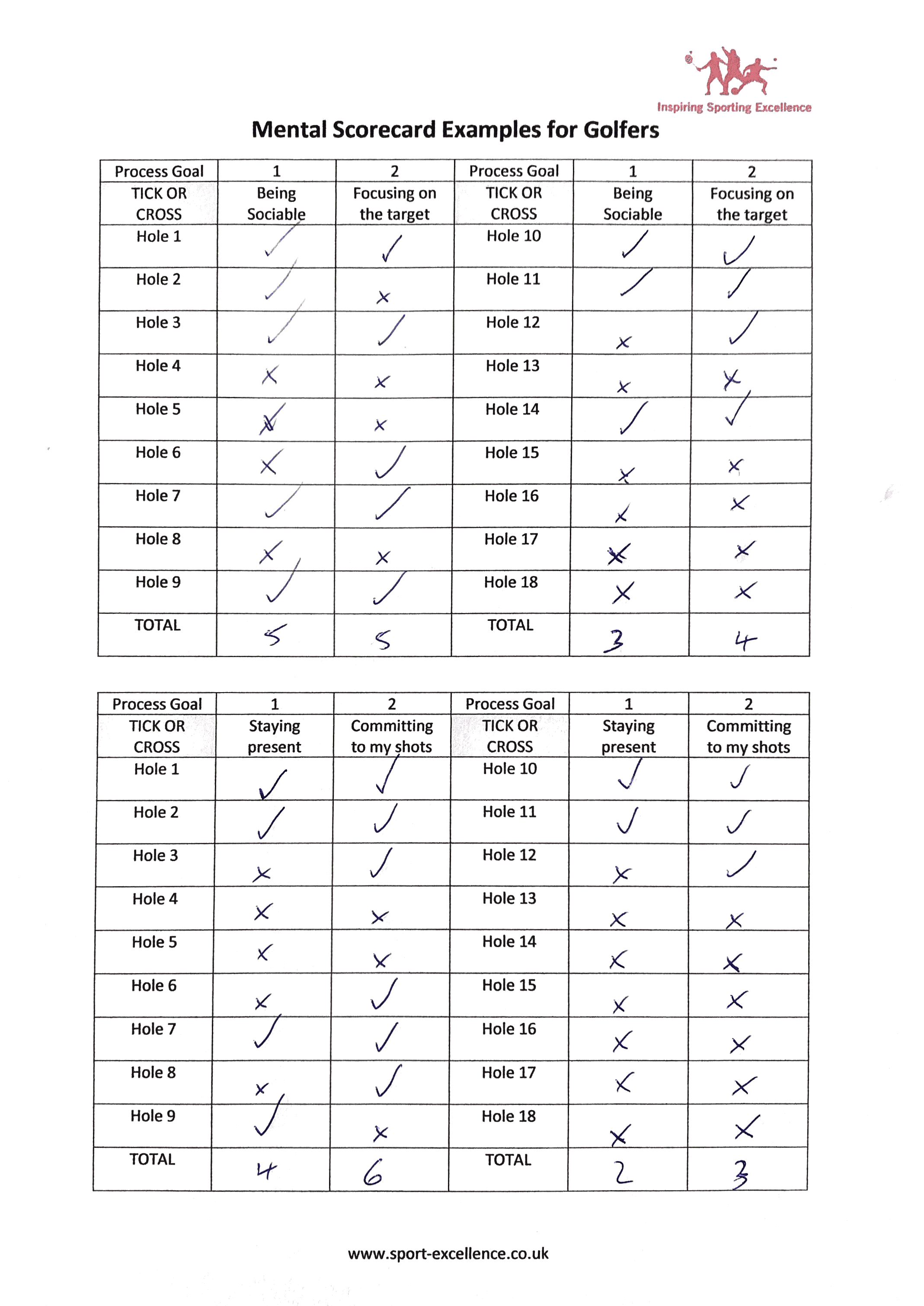
Golfers Mental Scorecard

Golf Psychology FAQs

Psychology of Golf Library

IF YOU ENJOYED TODAY'S SHOW PLEASE SHARE

SUBSCRIBE AND LISTEN ON YOUR FAVOURITE AUDIO PLATFORM

Also, kindly consider taking the 60-seconds it takes to leave an honest review and rating for the podcast on iTunes, they’re extremely helpful when it comes to the ranking of the show and we read every single one of them!

David Charlton

Best Wishes 

David Charlton

Global Sports Psychologist who is located near Newcastle Upon Tyne, UK and willing to travel Internationally.  David also uses online video conferencing software (Zoom, Facetime, WhatsApp) on a regular basis and has clients who he has supported in USA, Canada, South America, UAE, Australian and New Zealand.  

Managing Director – Inspiring Sporting Excellence and Founder of The Sports Psychology Hub.  With over 10 years experience supporting athletes, coaches, parents and teams to achieve their goals, quickly. 

E: [email protected]

The Mental Edge 03 Mar 2023

Tony Robbins Quote: Rewarded

03 Mar 2023 Helping You Gain A Mental Edge Self Care: How important is it to you? In my work I come across a lot of athletes, coaches and support staff who have a lot of hallmarks of being mentally tough.  They are confident people who have belief in their ability.  They love a challenge

How To Prevent Burnout In Elite Professional Football To Maximise Performance

EP 159 Episode Cover Dr. Andrew Shafik

How To Prevent Burnout In Elite Professional Football To Maximise Performance

Dr Andrew Shafik

Dr Andrew Shafik is a doctor working in football as Lead Academy Doctor at Millwall FC and a doctor at Chelsea FC. 

He was educated at the University of Aberdeen where he graduated with a Medical degree and Sport & Exercise Science degree.  Andrew also pursued further studies achieving a distinction in an MSc in Sport and Exercise Medicine at the University of Leeds where he was awarded the Sport & Exercise Medicine prize for 2020/2021.  He also holds a Diploma in MSK Medicine and is a Member of the Faculty of Sport and Exercise Medicine.

Andrew has a special interest in football medicine and performance education with roles as Senior Editor and Podcast Lead at the FMPA and Assistant Secretary at the FA Medical Society.

If you’ve got to the point where you’ve experienced physical, emotional and mental exhaustion you may have experienced burnout.  This can happen to people who are subjected to high levels of stress and pressure over a sustained period of time. In elite sport prolonged and intense involvement as an athlete, coach or support member can push you in this direction where your motivation and performance levels can naturally decline.  In addition, your psychological well-being and mental health can also be a cause for concern where you can lack enjoyment in what you do, become more irritable with others and have difficulty sleeping at night.

In today’s episode Dr. Andrew Shafik, a club doctor at Millwall and Chelsea Football clubs goes on share some fascinating insights where we chat about what players, coaches and support staff, can go on to experience. We also share solutions to some of the challenges that people face.

Key Learnings

  • Sports medicine side is connected with understanding injuries and illness.  As a doctor of performance medicine, Andrew seeks to work out how we can utilise our experiences of working within a multi-disciplinary team to maximise the performance and well-being of athletes, coaches or staff.
  • Sports psychologists can be very helpful in assisting medical staff to manage players to an optimal level during their rehabilitation and recovery.
  • Recent research tells us in the NHS, in healthcare settings, one in three practitioners at any one time often experience burnout due to the demands put on them.
  • Culture and the environment can play a huge part in burnout and the well-being of staff.
  • Your age, stage of career, gender, culture and relationships can impact your mental health.
  • Understanding your levels of mental toughness and other characteristics can be helpful from a self-awareness angle and ensure that you make smarter decisions.

Connect with David Charlton

Sign Up to The Mental Edge

Join David @ The Sports Psychology Hub

Instagram, Facebook, Twitter and LinkedIn

Connect with Dr Andrew Shafik

LinkedIn

Football Medicine and Performance Association Podcast with Steven Reid

Burnout and well-being in football online event – 06 March 2023

Relevant Podcast Episodes

Ep065: Dr Amy Izycky – Encouraging Mentally Healthy Cultures in Sport

Ep066: Marilyn Okoro – Mental Health and Resilience: Lessons from an Olympic Medalist

Ep113: Polly Brennan – The Relationship Between Mental Fitness, Mental Health and Mental Toughness

Ep123: Richard Dorney MBE – Supporting People: What Can You Learn About Resilience From The Military

Ep158: Dr Paul Gorczynski – How to Develop and Implement Mental Health Literacy Strategies

Relevant Blogs

Blog – Make Better Decisions to Help Your Sport Performance

Blog – 5 Ways to Create a Psychological Safe Sporting Environment

Blog – 3 Tips to Deal with Bullying in Sport

Blog – Creating a Mentally Healthy Sporting Environment

Blog – Life After Professional Sport and its Challenges

IF YOU ENJOYED TODAY'S SHOW PLEASE SHARE

SUBSCRIBE AND LISTEN ON YOUR FAVOURITE AUDIO PLATFORM

Also, kindly consider taking the 60-seconds it takes to leave an honest review and rating for the podcast on iTunes, they’re extremely helpful when it comes to the ranking of the show and we read every single one of them!

David Charlton

Best Wishes 

David Charlton

Global Sports Psychologist who is located near Newcastle Upon Tyne, UK and willing to travel Internationally.  David also uses online video conferencing software (Zoom, Facetime, WhatsApp) on a regular basis and has clients who he has supported in USA, Canada, South America, UAE, Australian and New Zealand.  

Managing Director – Inspiring Sporting Excellence and Founder of The Sports Psychology Hub.  With over 10 years experience supporting athletes, coaches, parents and teams to achieve their goals, quickly. 

E: [email protected]

The Mental Edge 24 Feb 2023

24 Feb 2023 Helping You Gain A Mental Edge Whats Your Thoughts? Does Optimised Mental Health = Better Performances? Most professional clubs, academies and governing bodies managerial staff are well versed in trying to ensure that their players or athletes are technically skilled and tactically well versed. As well, making sure that their athletes have
How to Develop and Implement Mental Health Literacy Strategies

EP 158 Episode Cover Paul Gorczynski

How to Develop and Implement Mental Health Literacy Strategies

Paul Gorczynski

Paul Gorczynski, PhD, HCPC, CPsychol, AFBPsS: A Senior Lecturer and Chartered and Practitioner Psychologist. Paul has consulted for sporting organizations (e.g., IOC) and governments (e.g., a Women and Equalities Committee, UK Parliament on LGBTQ+ mental health service use and the Colombian Ministry of Sport on mental health literacy).

Paul has also developed and delivered training programmes on mental health for BASES and the IOC Medical and Scientific Committee (see below):

BASES Mental Health in Sport and Exercise units

Global Diversity in the World of Sport and Performance: The Link Between Culture and Mental Health Webinar

IOC Mental Health in Elite Athletes Toolkit

Paul Gorczynski’s contact details and research publications

Mental Health in sport is a topic which over the last decade has become more significant and a big talking point with many elite athletes and coaches openly talking about their personal challenges and struggles.  Yet do clubs and organisations take their needs seriously? In some cases, this is arguable.  Though, thankfully it is changing for the better.

Today’s guest, Dr Paul Gorczynski and I discuss this topic where he talks about his interest in mental health, his research in the development and implementation of mental health literacy strategies.  He shares some great advice for decision makers in organisations as well as useful ideas for Sport and Exercise Psychologists who have an interest in mental health and psychological well-being.

Key Learnings

  • Mental health literacy refers to the knowledge and understanding of mental health, including the ability to recognize signs and symptoms of mental illness, understand the causes and risk factors, and know how to access appropriate resources and support.
  • Mental Health Literacy projects Paul has been involved with include work with the International Olympic Committee (IOC) where he looked at improving diagnosis and treatments for elite athletes and shifting the culture in relation to how mental health was viewed.
  • Athletes have a life outside of sport therefore a holistic approach is required.
  • As a Sport and Exercise Psychologist it is essential to recognise the limits of what you know and can help someone.  Having a clear referral process to more qualified mental health practitioners is essential.
  • Helping people in sporting clubs and organisations to engage in open and informed conversations about mental health and reducing the stigma surrounding mental health and well-being is a large part of mental health literacy policies.
  • Having mental health literacy is important for individuals to take care of their own mental health.
  • Mental health literacy can support athletes or coaches who may be struggling with mental health issues.  It can also help by increasing awareness and understanding, promoting early intervention and treatment, and improving overall mental health outcomes.

Connect with David Charlton

Sign Up to The Mental Edge

Join David @ The Sports Psychology Hub

Instagram, Facebook, Twitter and LinkedIn

Connect with Dr Paul Gorczynski

Website

Email

Relevant Podcast Episodes

Ep065: Dr Amy Izycky – Encouraging Mentally Healthy Cultures in Sport

Ep066: Marilyn Okoro – Mental Health and Resilience: Lessons from an Olympic Medalist

Ep113: Polly Brennan – The Relationship Between Mental Fitness, Mental Health and Mental Toughness

Ep123: Richard Dorney MBE – Supporting People: What Can You Learn About Resilience From The Military

Ep128: Paula Eddy-Wilcox – Can You Show Vulnerability and Be Mentally Tough? Yes!

Relevant Blogs

Blog – Make Better Decisions to Help Your Sport Performance

Blog – 5 Ways to Create a Psychological Safe Sporting Environment

Blog – 3 Tips to Deal with Bullying in Sport

Blog – Creating a Mentally Healthy Sporting Environment

Blog – Life After Professional Sport and its Challenges

IF YOU ENJOYED TODAY'S SHOW PLEASE SHARE

SUBSCRIBE AND LISTEN ON YOUR FAVOURITE AUDIO PLATFORM

Also, kindly consider taking the 60-seconds it takes to leave an honest review and rating for the podcast on iTunes, they’re extremely helpful when it comes to the ranking of the show and we read every single one of them!

David Charlton

Best Wishes 

David Charlton

Global Sports Psychologist who is located near Newcastle Upon Tyne, UK and willing to travel Internationally.  David also uses online video conferencing software (Zoom, Facetime, WhatsApp) on a regular basis and has clients who he has supported in USA, Canada, South America, UAE, Australian and New Zealand.  

Managing Director – Inspiring Sporting Excellence and Founder of The Sports Psychology Hub.  With over 10 years experience supporting athletes, coaches, parents and teams to achieve their goals, quickly. 

E: [email protected]

The Mental Edge 17 Feb 2023

Level of Growth

17 Feb 2023 Helping You Gain A Mental Edge Improve Your Mental Game And Improve Your Performance By Up To 25% Sports Psychology has benefits it really does! How important is your mental game to you?  How much does it impact your performance levels?  Some would say 10%, some 50%.  The great American golfer Jack
Conversations With Kids: Fixed Mindset

Fixed Mindset

Conversations with Kids – Week 20 For parents and guardians where we give you prompts so that you can have more meaningful conversations with your children to help them build key characteristics such as mental toughness, resilience, confidence, creativity, focus and so on.   A Question for your Kids Is Your Mind Growing Or Is It